• About

Sustainability, Creativity, and Innovation: Sustainability in the Classroom

  • Genius Hour Project: Seed Starting in Manitoba

    March 28th, 2024

    I was inspired by my Deep Food Learning Challenge where I ate local Manitoban foods for a day and shared resources for others to eat more locally. The main challenge was local fruits and vegetables in the winter months. I decided to challenge myself to begin seed starting at home this winter, and then plant what I grew outside in my garden in the spring. Gardening has always been a hobby for me. My vegetable and fruit gardening experience thus far has been buying seeds that can be directly sowed into the ground and buying plants from greenhouses that I plant in the spring. I have never had success in starting my seeds indoors and transplanting in the spring.

    The process of seed starting will allow me to save money on plants, have control over the seeds and variety of plants grown, reduce the plastic from buying as many plants from greenhouses, and allow me to extend my growing season, increasing the yield of crops.

    I started my project with purchasing some seeds from a local organic nursery Sage Garden Greenhouses. They specialise in sustainable and organic gardening.
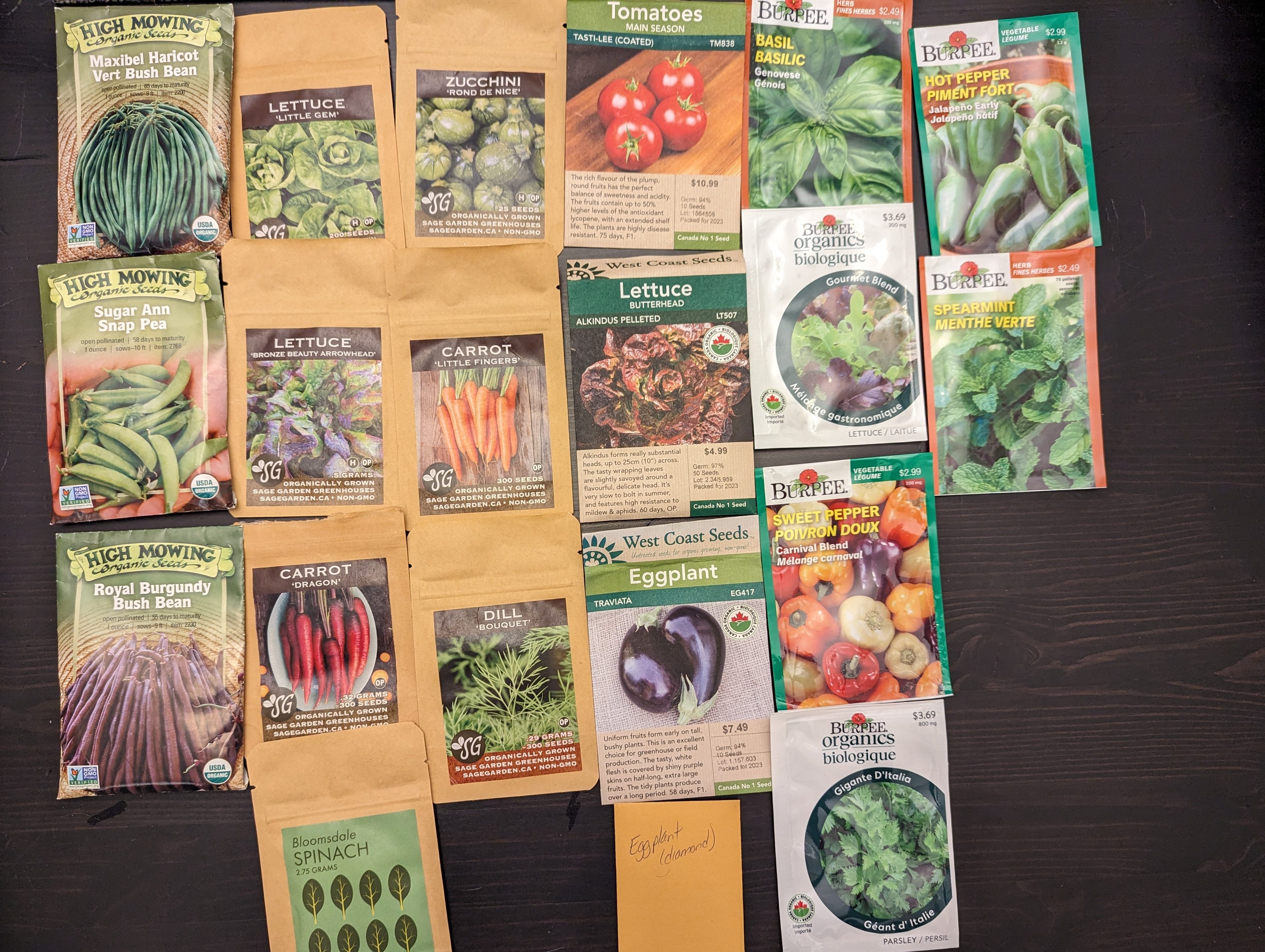
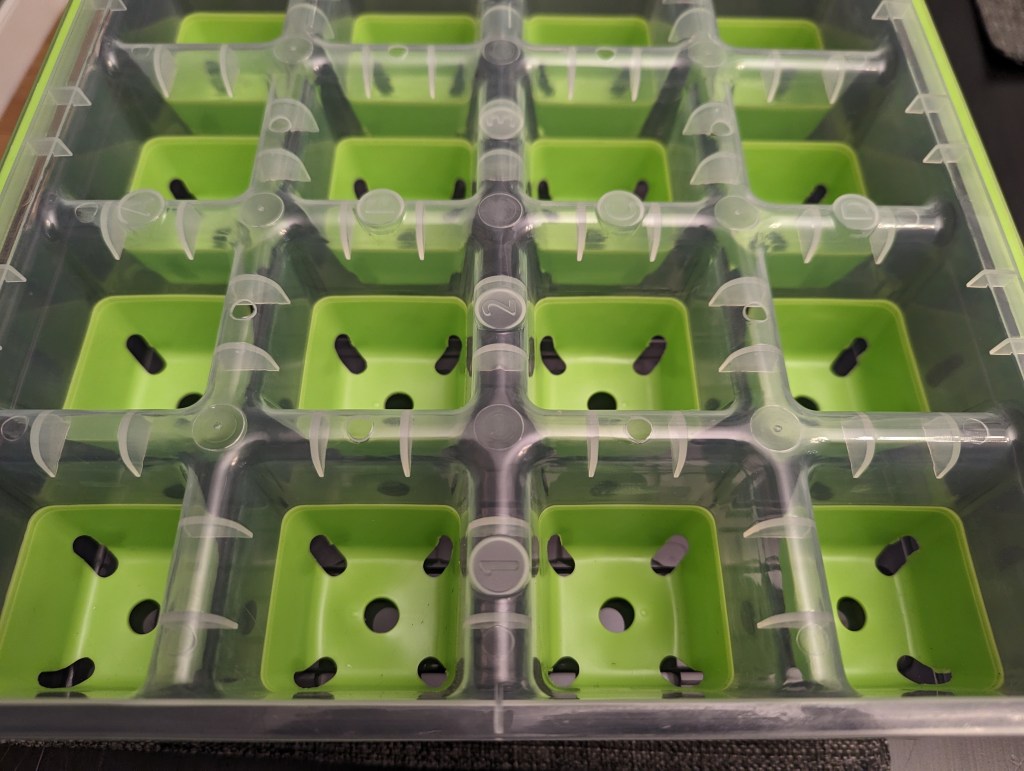
    Next, I purchased some seed starting containers from Superstore along with some more varieties of seeds. I chose this variety of containers because they are reusable and can be used every year.
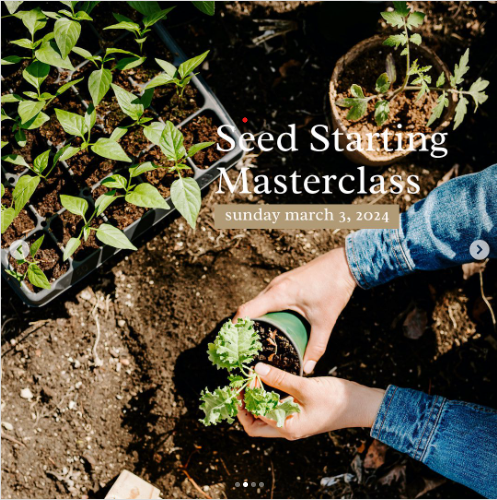
    After purchasing some seeds and seed starting containers, I saw a post on Instagram for a seed starting workshop being offered by a local Manitoban gardener, Maggie Wysocki, from the blog From Soil to Soul . I decided to sign up for this workshop to officially begin learning about the ins and outs of planting seeds, before I begin planting by myself. I learned a lot at this workshop and I have summarised what I have learned below.
    Canada is divided into Hardiness Zones that indicates what plants grow well where. Where I live in Manitoba, I am in Zone 3b. It is important to know what zone you are located in when choosing plants to grow in your area, especially perennials.
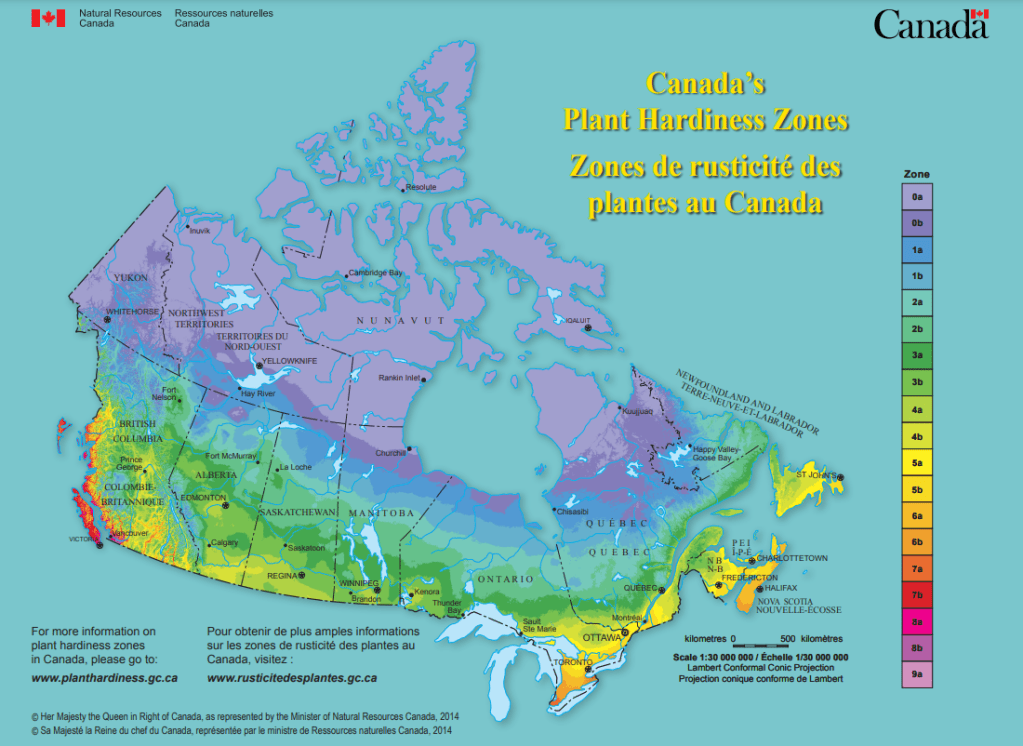
    Map sourced from: http://planthardiness.gc.ca/?m=1.

    In addition to knowing your grow zone, it is important to consider the micro-climate, which is the environment in your own garden that you can manipulate and which affects growing conditions. For example, the amount of wind, sunlight, and rain your garden gets.

    Frost dates are another factor to consider when planting outdoors and when to cover, or take plants indoors. Frost dates refer to the average last light freeze in the spring and the first freeze in the fall. The general rule is to plant when nighttime temperatures are consistently at 10 degrees Celsius.

    Seeds:

    There are a variety of things to consider when purchasing seeds for your garden. Some key terms to note are whether a plant is an annual or perennial. Annuals are plants that germinate flowers in the first growing season and die off after the first growing season. Perennials are plants that live longer than one growing season. Heirloom seeds are plants that have a history of being passed down hundreds of years and the seeds have been saved. Hybrid seeds are controlled method of pollination. Open Pollinated have been pollinated naturally by pollinators.

    When storing seeds, ensure you store them in a dry, dark space, away from sunlight and moisture. Organise your seeds based on variety and planting month.

    Seeds generally have a lifespan of 3-5 years. To test to see if a seed is still viable, you can do a germination test by placing seeds in a wet paper towel in a Ziploc bag and tape it to the window to see if they open up.

    I have linked below some of the companies that I have purchased seeds from in the past, the majority of these places sell organic seeds:

    • West Coast Seeds
    • High Mowing Organic Seeds
    • Sage Garden Seeds
    • T and T Seeds

    One of the most important things I learned at this workshop is the importance of timing for when to start each plant indoors. We were given a helpful guide with the months to start indoors, direct sow outdoors, transplant outside, and cover outside.

    Seeds to start indoors in March include: Artichoke, Broccoli, Cabbage, Cauliflower, Celery, Chickpeas, Kale, Leeks, Onions, Peppers, Tomatoes,

    Seeds to start indoors in April include: Eggplant, Lettuce, Melons, Pumpkin, Rhubarb, Squash

    Seeds to direct sow outdoors in May include: Amaranth, Beans, Soya Beans, Beets, Corn, Cucumbers, Radicchio, Onions, Parsnips, Peas, Spinach, Swiss Chard, Turnips

    Soil:

    Traditional Soil Blend consists of:

    • 40% Potting Soil
    • 20% Coco Coir (or peat)
    • 20% Vermiculite or Perlite
    • 20% Worm Castings

    Blocking Method Blend consists of:

    • 20% Potting Soil
    • 20% Coco Coir (or peat)
    • 40% Perlite or vermiculite
    • 20% Worm Castings

    There are ethical and environmental considerations when creating your soil mix. Check out the video to learn about Coco Coir vs. Peat. Maggie suggesting avoiding peat when creating your soil blends due to the environmental impact of extracting peat.

    Light:

    Light is an important factor when starting seeds indoors. We were recommended Sunblaster lights to use in addition to natural light at 6400 Kelvin units, which simulates light from a July day at 2 pm. Using a timer with your grow lights set to 16 hours on during the day and 8 hours off at night is recommended. I happen to have a grow light that I purchased years ago when I had plans to try seed starting, but it didn’t work out at the time, so I am happy to finally put it to good use.

    Water:

    The last factor to take into consideration when seed starting is watering. When first planting seeds, you can cover your trays with saran wrap to act as a green house, or upgrade to a plastic dome. Bottom water every 3-5 days. I purchased this mini greenhouse to act as my moisture dome.
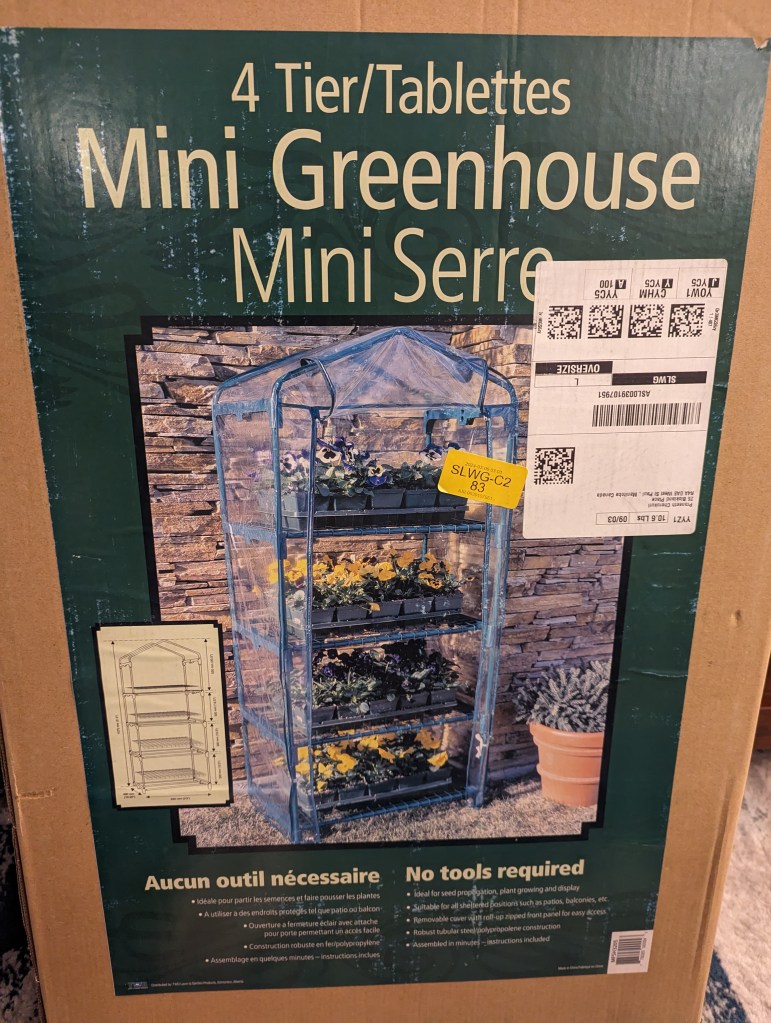
    Water with fertilizer mixed in every couple weeks. Sea Magic is one variety of organic fertilizer and it is a Manitoba company.

    My Seed Starting Journey:

    March 3rd– Attended seed starting workshop. I planted 6 seeds at the seed starting workshop- 2 travatia eggplant, 2 diamond eggplant, 2 lettuce, and 2 tomato.

    March 8th– My first sprouts appeared- little tomato and lettuce plants! Very exciting day!

    March 10th– I built the little indoor greenhouse, set up the grow light, and placed my little seedlings from the seed starting workshop inside. I also set a timer for the grow light, following the recommendation of 16 hours on and 8 hours off. My grow light uses red and blue lights, and to promote germination, I currently have it set to the red light.
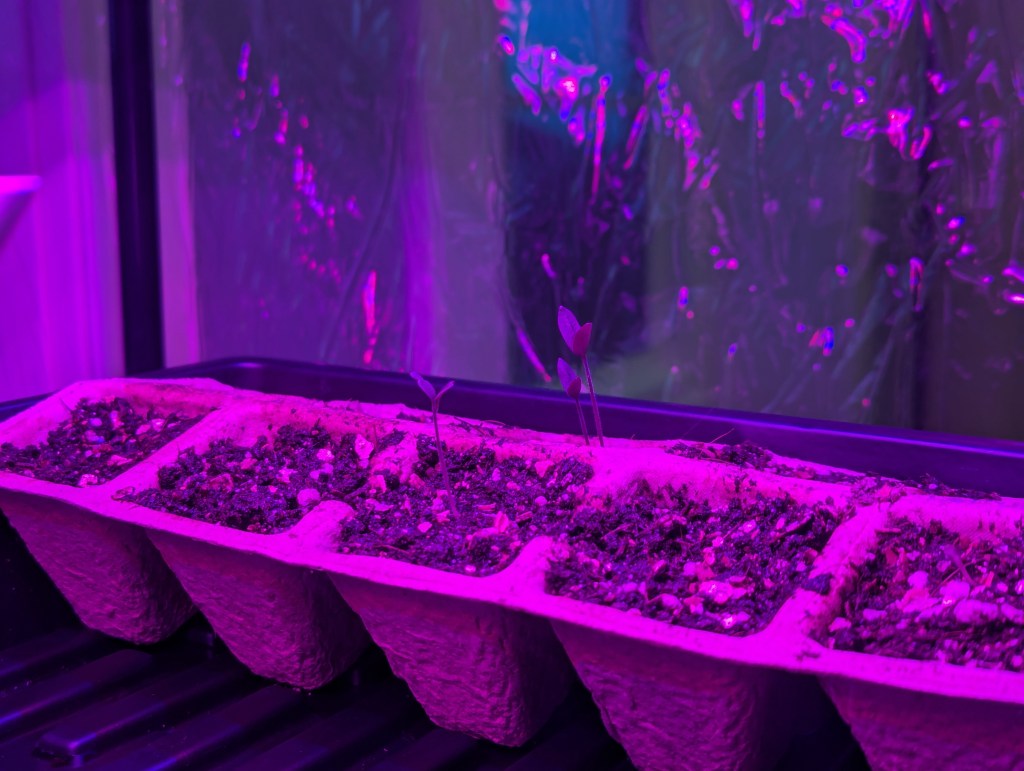
    March 11th Tomato Seedlings

    March 12th- I went through each seed packet that I had and checked how many weeks before the last frost date it should be started indoors and made this chart so I know when to plant my remaining seeds so they will be the appropriate size when it is time to plant outdoors.

    Anticipated Last Frost Date for Manitoba (According to the Farmers Almanac): May 21st (I went with May 28th to be safe as we have had frost in June in the past)
    # of weeks before last frost dateDate to seedSeeds to Start
    10 weeks before last frost dateMarch 19th– Spearmint
    9 weeks before last frost dateMarch 26th 
    8 weeks before last frost dateApril 2nd-Sweet pepper -Hot peppers -Eggplant
    7 weeks before last frost dateApril 9th-Basil
    6 weeks before last frost dateApril 16th-Tomatoes -pumpkins
    5 weeks before last frost dateApril 23rd 
    4 weeks before last frost dateApril 30th-Dill -Zucchini -Squash -Lettuce
    3 weeks before last frost dateMay 7th 
    2 weeks before last frost dateMay 14th 
    1 week before last frost dateMay 21st (last frost date) 
    0 weeks before last frost dateMay 28thSeeds to direct sow into garden: carrots -spinach -lettuce -peas -beans -potatoes- corn
    Seed starting chart

    Now that I have created this chart from following the instructions on the packet of the specific seeds that I plan on planting, I realised that I don’t need to start all of my seeds at the same time or as early as I thought.

    March 12th- Listened to Grow Guide Podcast Episode: A Seed Starting Refresher

    • Take away points:
      • there are many types of plants that you can direct sow in your garden- it is not necessary to start seeds indoors to have a successful garden
      • if you are going to start seeds indoors, a grow light is essential
      • look on your individual seed packets to learn when they should be started indoors or direct sowed in your garden
      • only start seeds when you have the time and ability to do so properly

    March 13th– Listened to Grow Guide Podcast Episode: Planning Your Best Garden Yet with Sharon Murphy

    • Take away points:
      • keep good records/notes from your garden from year to year including what you planted when and how much did you get with your harvest
      • use the shoulder season to do a needs assessment- what do you want to achieve in your garden this year and notice how many hours of sunlight your garden has/ what is the wind like in your area/ are there any animals walking through your area? Then begin the planning stage of your garden
      • be strategic when buying plants at garden centres- be aware of the space and type of garden you have; buy unique items first then get the rest as you need it

    March 14th- Listened to Grow Guide Podcast Episode: Gardening On a Budget with Dave and Maggie

    • Take away points:
      • re-use your seed starting materials and containers from year to year
      • starting from seed yourself is cheaper than buying established plants from garden centres (once you have all of your seed starting supplies)
      • join your local garden clubs to seed and plant swap
      • mulch around your garden and plants to help hold in moisture to reduce watering

    March 15th and 18th- Listened to Grow Guide Podcast Episode: Honouring Earth Day with Horticulturist, Melanie Mercier

    This episode inspired me to save all of my cardboard and start a new native pollinator garden on my front lawn! We will see if the spring allows!

    • Take away points:
      • save your cardboard and use it as a base when starting new gardens in your yard (don’t use landscape fabric!)
      • convert some (or most) of your lawn into pollinator friendly habitats
      • leave the leaves!- use the leaves that fall naturally to act as a soil cover to retain moisture
      • plant native plants that are adapted to your climate and use less water
      • plant a variety of plants in your garden of varying heights that will assist in covering the soil to retain moisture
      • plant pollinator friendly gardens and try and incorporate plants that retain water naturally on the leaves for the butterflies and other insects
      • No Mow May!- dandelions are often the first food for pollinators
      • be careful what plants you clean up from your flowerbed in the fall, some pollinators use the stems and fallen leaves as their home for the winter months
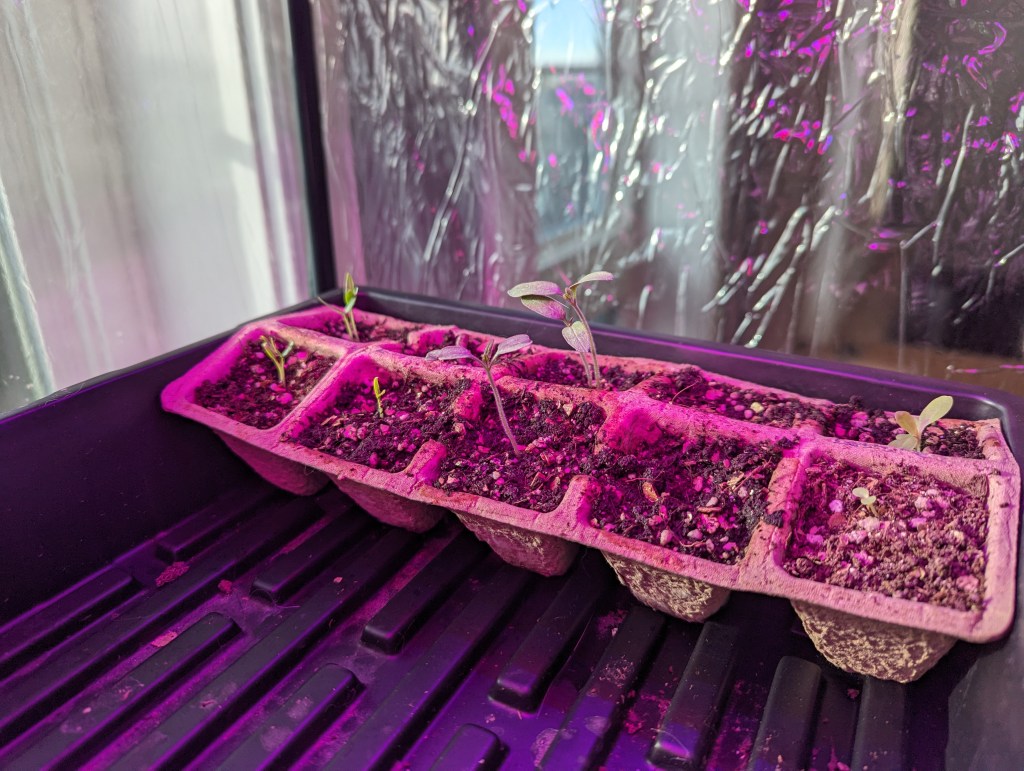
    March 15th seedlings update: the eggplants have sprouted!

    March 19th- Listened to Grow Guide Podcast Episode: Planning Next Season’s Garden with Pollinators in Mind with Mary Phillips

    • Take away points:
      • take note of what type of raspberry plants you have as that affects what growth of the plant produces fruit (last years growth vs. current years growth)- this is important to know when pruning
      • plant native plants!
      • try and incorporate a water source for pollinators
      • native plants provide food, shelter, and a place to grow young for pollinators
      • specific plants provide habitat for different pollinators- take note of what pollinators you want to attract. Ex. Milkweed is necessary for the monarch butterfly

    On this day I also planted by spearmint seeds and decided to start my peppers a couple weeks earlier than what I listed on my chart, as some local gardeners have suggested planting hot peppers earlier than listed on the seed packet.

    March 20th- Listened to Grow Guide Podcast Episode: Easy Tips for Growing Hardneck Garlic in Raised Beds, In Ground Gardens AND In Containers with Niki Jabbour

    • Take away points:
      • plant your garlic bulbs in the fall once temperatures drop and soil can still be worked
      • there are many different types of garlic that produce slightly different flavours
      • garlic scapes can be used in cooking

    March 21st- Listened to Grow Guide Podcast Episode: Fruiting Trees You Can Plant this Fall to Create your own “Food Forest”

    • Take away points:
      • Mimic nature to create a layered garden with large trees as the canopy, a ground-cover, and a base layer
      • check to see what trees grow best in your micro-climate before planting
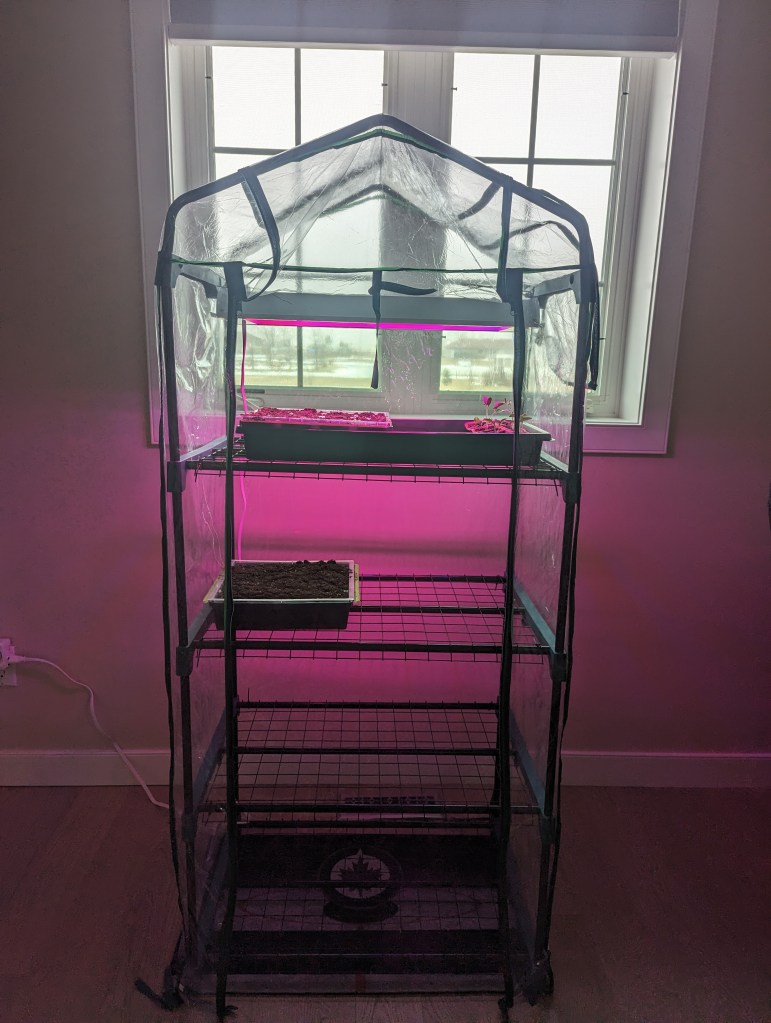
    March 26- Current set up

    Companion Planting Guide:

    When planning my vegetable garden, I wanted to try and use a companion guide to see what plants are mutually beneficial for each other. I found a few sources online with generally the same ideas. I included one of the companion planting guides below:
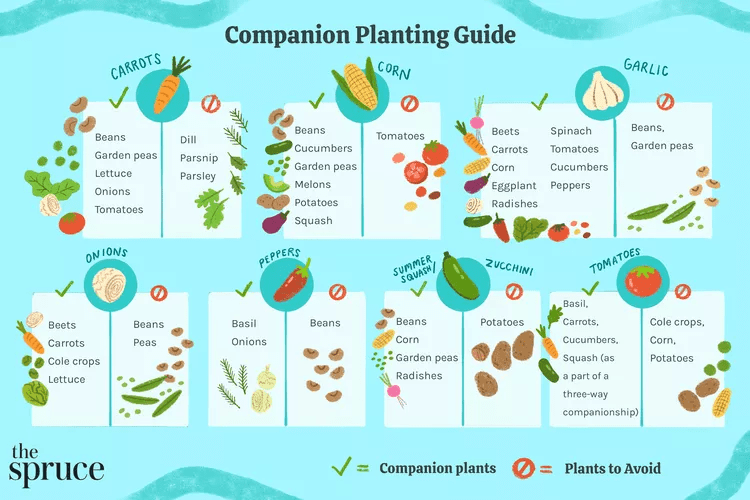
    Infographic sourced from: The Spruce

    My fruit and vegetable garden plan:

    I moved into my home in July 2023. In the first two months we planted the following trees: two apples, two pears, two plums, two cherry and shrubs: two saskatoons and two haskaps.

    We also built 6 raised garden beds 5 ft by 10 ft- 50 square feet each.
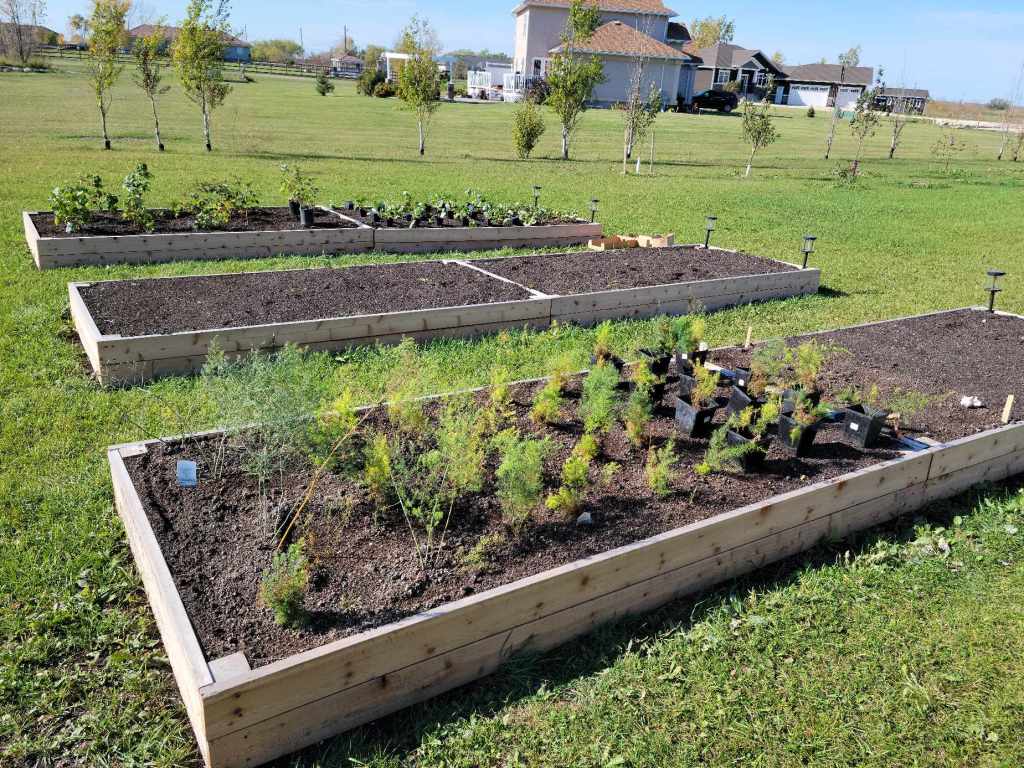
    Photo taken fall 2023 during planting
    • Garden Bed One: Asparagus (36 plants- planted in September 2023- will be able to harvest the asparagus in 2-3 years)
    • Garden Bed Two: Strawberries ( 32 plants- planted in September 2023)
    • Garden Bed Three: Raspberries (8 plants- planted in September 2023)
    • Garden Bed Four: Garlic bulbs (planted fall 2023), carrots, onions, potatoes
    • Garden Bed Five: Tomatoes, bell peppers, jalapeno peppers, dill, basil
    • Garden Bed Six: Zucchini, beans, peas, carrots, spinach, lettuce

    Time to Plant Outdoors:

    When it comes to planting outdoors in your garden, typically after the May long weekend for us in Manitoba Zone 3, it is important to remember to check the last frost date to ensure the nighttime temperatures are consistently above 10 degrees Celcius. Before actually planting in the ground, it is important to harden off your seedlings, with 14 days of bringing your plants in and outdoors to help them get used to the outdoor sunlight and weather conditions. Consider the companion planting guide to ensure your plant will do well with its neighbours, and the micro climate your garden is located in. Finally it is time to plant! You can amend your soil with compost (I have been composting all winter with my Food Cycler and saving all of the compost for spring planting). Water the hole thoroughly before planting and covering with soil to ensure the roots have enough moisture. Continue to check the weather for frost and cover the plants at night with a light blanket if there is a risk of freezing.

    Benefits:

    There are many benefits from growing your own garden. The main one being having control over where your food comes from. By growing your own fruit and vegetables you are eliminating the carbon footprint that comes from shipping food from various countries around the world. You also have more power in controlling the fertilizers and chemicals that are used on many mass produced gardens and opt for natural organic fertilizers, making your food more healthy. I also think that there is a mental health benefit with gardening as it allows to you spend time in nature in a productive way. Growing your own food not only tastes better, but also gives some personal satisfaction of doing it yourself, getting sunlight and exercise along the way.

    Additional Resources for Gardeners:
    • From Soil to Soul Blog
    • Grow Guide Podcast
    Photo sourced from the Grow Guide Podcast
    • Farmers Almanac
    • Shifting Roots Blog
    • Epic Gardening
    • Savvy Gardening Blog

    Conclusion:

    Upon completion of my genius hour project, it became apparent that when you are able to pick a topic you care about, you are more motivated to put in extra time (as much time as needed) to complete the project, as it is something that you are passionate about.

    I am happy to have picked seed starting as my genius hour project. It has allowed me to learn a lot about gardening which has helped plan my garden for the spring. I am excited for outdoor planting season, and looking forward to caring for and harvesting the garden this summer.

    Now that I have experience with seed starting at home, I will feel more confident starting seeds with my students in the classroom. While learning alongside students can be successful and beneficial, I always like to have a base knowledge first in order to help guide students in the right direction. While we do not currently have garden space in our schoolyard for an outdoor garden, my long term goal would be to start a gardening club at my school where we start seeds indoors, transplant outside in the spring, take care of them during May and June and make community connections to help maintain during July and August when school is out and then harvest in the fall, making a meal and donating the vegetables we harvested.

    Simply learning about seed starting myself and gaining this first year of experience is a good start to achieving this goal. While I did not get the chance to complete planting all of my seeds in the timeline of this course, this is something that I plan on continuing working on, even after the course is done.

    References:

    Government of Canada, N. R. C. (n.d.). Canada’s plant hardiness site. http://planthardiness.gc.ca/?m=1

    The Grow Guide. (n.d.). The grow guide. https://www.thegrowguidepodcast.com/

    Hassani, N. (2024, February 27). The basics of companion planting garden crops. The Spruce. https://www.thespruce.com/companion-planting-with-chart-5025124

    Wysocki, M. (2024, March 28). Home. From Soil to Soul. https://fromsoiltosoul.ca/

    YouTube. (2022, March 1). Peat Moss vs. Coconut Coir: Are They both bad?. Epic Gardening. https://www.youtube.com/watch?v=f8XNw2UFKWE

  • Deep Learning Food Challenge: Eating Local in Manitoba

    March 9th, 2024

    Living in the middle of the prairies, with long harsh winters, and a short growing season, it can be very difficult to find locally grown foods, particularly in the winter. For my Deep Learning Food Challenge, I have made it my mission to eat only local Manitoban sourced foods for one day and share places where you can find local foods to help others eat more locally.

    Before beginning this challenge I had to take a look at what I typically eat in a day and determine how much of that was produced in Manitoba. It turns out that it is difficult to be a vegetarian in winter when you want to eat fresh fruits and vegetables. I then looked in my fridge and pantry to see what I had that was local and what I needed to purchase to make three complete meals. I decided to head to the farmers market to purchase the items I was missing and was then ready to begin. Here’s how it went:

    Breakfast– Open faced breakfast sandwich

    Ingredients:

    • eggs- from a local Hutterite Colony
    • cheese- from Bothwell Cheese
    • honey- from a local market
    • hot sauce- from Intergalactic Sauces
    • bread- from Forgotten Flavours at the St. Norbert Farmers Market (a vendor new to me- they make their bread with a natural fermentation process)

    Lunch– Grilled Cheese Sandwich with pickles on the side

    Ingredients:

    • bread- from Forgotten Flavours at the St. Norbert Farmers Market
    • Cheese- from Bothwell Cheese
    • pickles- from Grammie’s Jams, Jellies, and Preserves at the St. Norbert Farmer’s Market

    Snack– Ice cream from Chaeban– a local ice cream shop in Winnipeg that makes their ice cream (and cheese) from scratch. They sell pints of ice cream in glass jars where you can bring them back to their store to re-use and they reimburse you $1, making their product zero waste. One of my favourite flavours is Abir Al Sham.

    Dinner- Vegetarian chili and cornbread muffins

    Ingredients:

    • cornmeal- from Winter Grain CSA
    • honey- from local market
    • Yellow Peas- from Winter Grain CSA
    • Navy Beans- from Winter Grain CSA
    • potatoes- from Blue Lagoon Organics
    • tomatoes- Sobeys
    • onions- from Peak of the Market
    • garlic- from my garden from last year’s crop
    • spices- (not local unfortunately)

    —

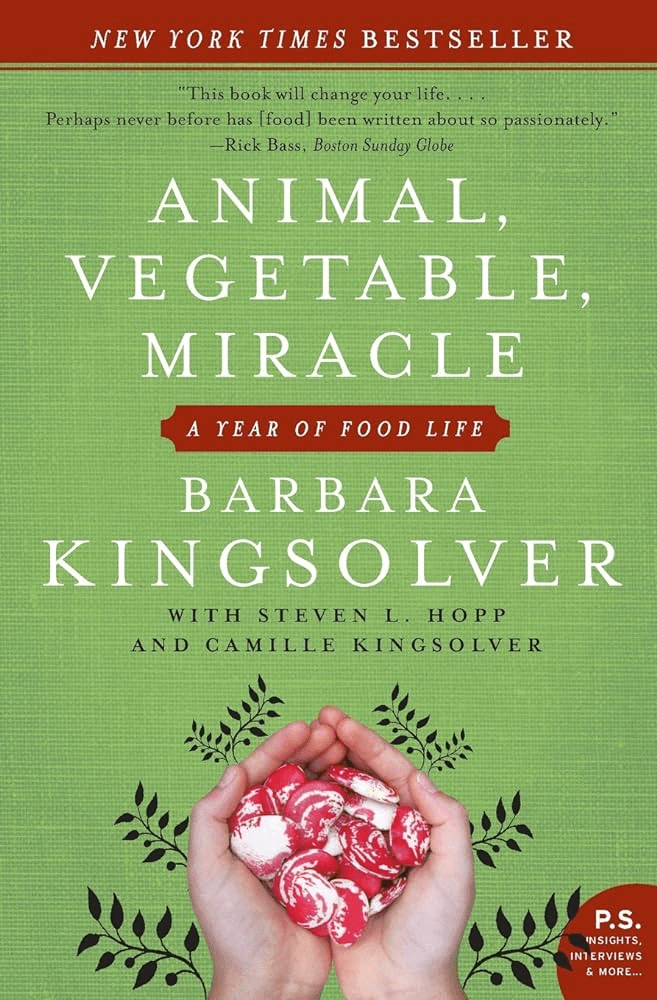
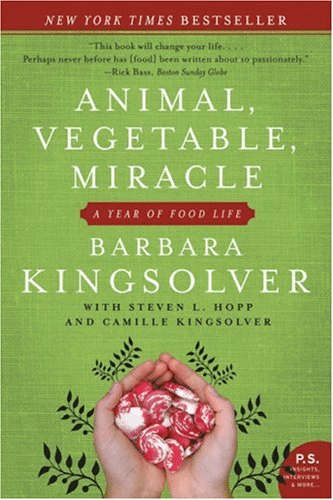
    After preparing just a few meals using only local ingredients, it reminded me of the book Animal, Vegetable, Miracle by Barbara Kingsolver. In this book, Barbara and her family go on a journey of eating only local, seasonal foods- foods that they either grew themselves or purchased locally. She documents her journey month by month and show the challenges they faced and why eating locally is so important for climate change and the local economy. Even though this book is set in the United States, I recommend this book for anyone beginning their local food journey. While I am not able to fulfil the commitment to the extent that Barbara and her family did, it did inspire me to make an effort to look where my food is coming from and try and buy local as much as I can to decrease my carbon footprint. I find this much easier to do in the summer, where I have my garden to supplement my local food purchases. I moved to my new home last summer and my first project was to plant fruit trees (apple, pear, plum, cherry, haskap, and saskatoon), strawberry and raspberry plants, garlic bulbs, and asparagus plants. I hope that everything survived the winter and I will be able to start to enjoy produce from my own yard this spring and summer.

    —

    While it can be difficult to source entirely local ingredients throughout the year, many grocery stores now label, and promote their local products. This tells me that there is a need and demand for local products.

    If you are interested in eating trying to incorporate more local foods and ingredients in your diet, check out the links below for resources for local Manitoba foods:

    The St. Norbert Farmers Market is the largest market in Manitoba and is filled with many vendors selling everything from arts and crafts, locally made foods and drinks, and plants in the spring and summer. The market is open Saturdays all year round, offering indoor sellers in the winter months, and expands to indoor and outdoor sellers in the spring and summer. The vendors vary depending on the season. My favourite is the spring and summer markets with the atmosphere of the outdoor market with music and food along with the vendors.

    A few of my favourite local vendors found at St. Norbert Farmers Market are:

    • Prairie Originals, for native Manitoba plants
    • Old Church Bakery, for sourdough bread
    • Blue Lagoon Organics, for organic vegetables and eggs (they also offer a CSA program)
    • Miss Kleo Pet Treats, for cat treats
    • Kyle’s Icelandic Vinarterta, for Icelandic Vinarterta dessert
    • Stony Brook Creamery, for local organic milk (in reusable glass containers) and cheese curds
    • Dutch Country Pretzels, for delicious homemade pretzels
    • Red Rivers Edge Farms, for fresh Asparagus in the spring
    • Kernel Sandy’s Kettlecorn, for sweet and salty popcorn
    • Bothwell Cheese, for fresh cheese made with Manitoban milk
    • Dead Horse Cider, for apple juice and apple cider from local Manitoba apples (they also offer a trade program where you can bring in apples from your tree and they will give you fresh apple juice or cider!)

    —

    Adagio Acres is a local, organic farm in Manitoba that values the human connection with food and the land. They have integrated their farmland into a variety of habitats on their land which allows animals and pollinators to still thrive in their area. They mill and process their own grains, as well as process grains for other organic farmers in the province.

    “We’re all in this together.  Trying to eat healthy food that is good for our bodies, and also good for this planet that we share.” 

    – Amy and Donald Nikkel, Adagio Acres
    Photo sourced from: Winter Grain CSA Facebook page

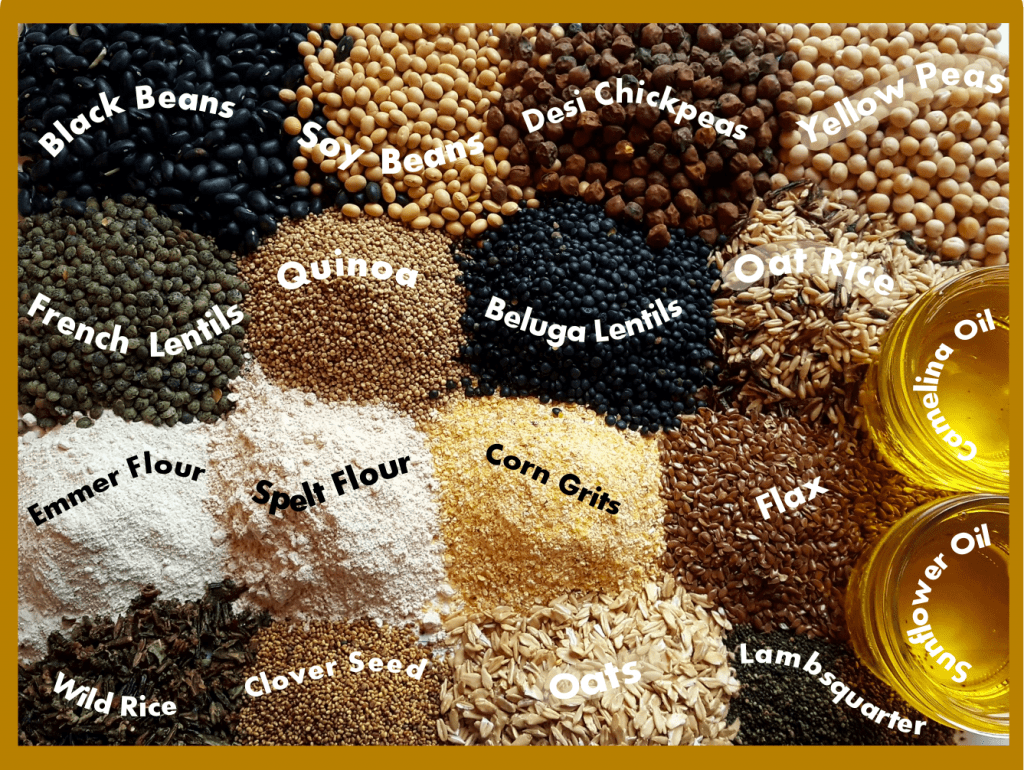
    Every year, they offer a Winter Grain CSA, which offers a variety of local, organic grains from their farm, but also from other farmers around Manitoba as well. They foster a sense of community on grain pick up day where all of the customers bring their own reusable containers to get filled in the space by the farmers that grew the crop, making this a near zero waste event. They also offer workshops on pick-up day as well. To provide recipe ideas for some of the grains that people might not be as familiar with, there is a Winter Grain CSA Facebook group where people share and ask for recipes. I purchased the half share grain bundle and it was interesting to see all of the grains that are grown locally in Manitoba, as some I was not familiar with. I used some of the grains in my dinner mentioned in this post.

    Photo Sourced from: https://adagioacres.com/wintercsa/

    —

    Fireweed Food Co-op is a non-profit co-op for small scale, sustainable, Manitoba farmers. Their goals include developing a thriving community with local farmers, who value sustainable regenerative agriculture, allowing Manitobans access to locally grown foods. They offer foods from a large variety of local farms.

    —

    Fort Whyte Farms, “is a working farm and award-winning social enterprise that bridges communities, creates learning and employment opportunities for youth, and grows healthy food for our community.

    As a social enterprise, our bottom line goes beyond financial gain to include social and economic benefits that impact the lives of individuals, families, and communities” (Fort Whyte Farms, 2024). They offer a market and CSA program to sell their local fruits and vegetables.

    Check out the video made by Fort Whyte to learn more about their amazing work:

    —

    Jonathan’s Farm offers both a winter and summer CSA program. They commit to ecological farming practices and don’t use herbicides or pesticides prohibited by organic standards. In addition to the CSA programs, their veggies can be found at the Wolseley Farmers Market. Jonathan’s Farm website has many great recipes based on the different vegetables that can be found in the CSA.

    —

    Direct Farm Manitoba is a cooperative of farms and markets in Manitoba and has information on how to start Farmers Markets in your area and information on Manitoba’s Community Food Currency Program.

    Home Page

    While the benefits of eating locally are evident for the environment, health, and for the local economy, there are some barriers and challenges. Barriers for people buying local food and cooking with local ingredients is unfortunately, the cost- not everyone can afford a $10.00 loaf of bread from the market. In these times, price is the priority over organic and local for many people. Additionally, when purchasing local foods from stores or farmers markets, it does not mean that the local maker used all local ingredients. When trying to eat completely local, it is difficult when you are not sure where the ingredients were sourced from.

    Another challenge that I faced was not having fresh fruit. I have been a vegetarian for many years and some of my favourite foods are berries and fruits. Not having access to local fruit at this time of year was disappointing. I look forward to summer when I will have fresh strawberries and raspberries from my own garden.

    —

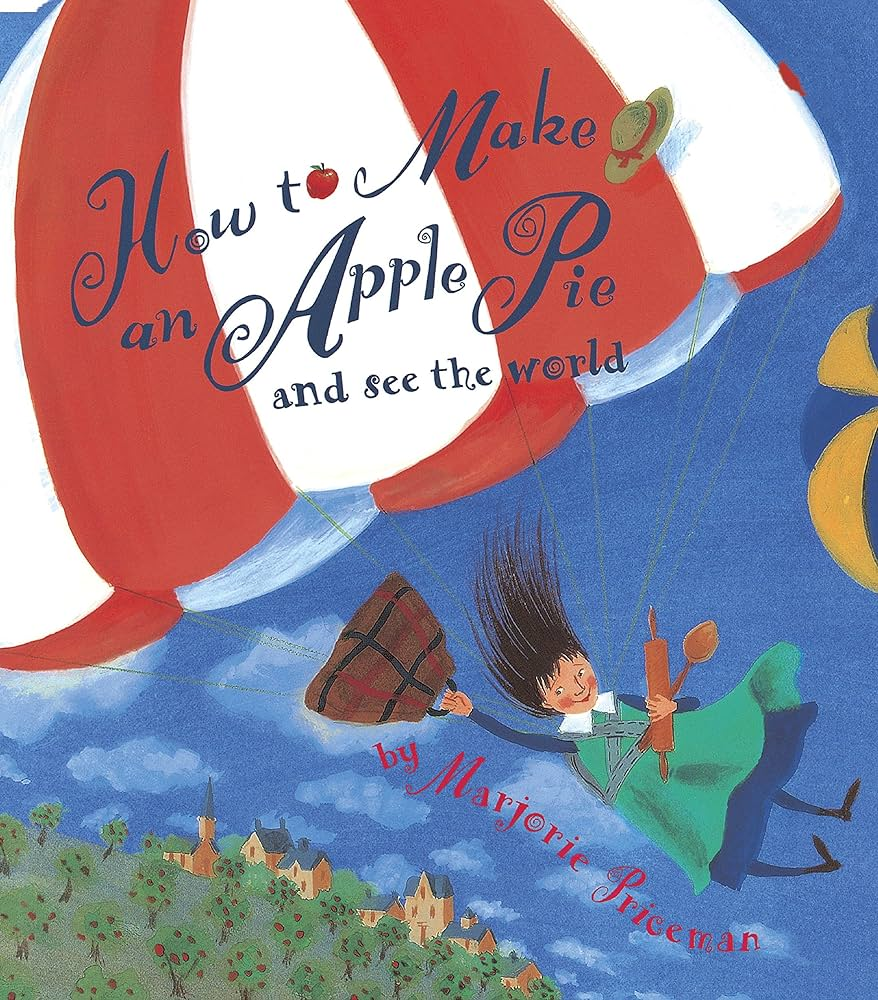
    Overall, I found this challenge to be beneficial as it really made me think about where my food comes from and all of the ingredients that goes into making a single meal. It reminded me of the picture book How to Make an Apple Pie and See the World by Marjorie Priceman. I read this book to my class every year when we make baked apples (with apples from my apple tree) and it draws attention to the fact that all of the ingredients needed to make an apple pie come from all over the world. It takes great effort to source your ingredients locally.

    I encourage everyone to challenge themselves to really look into where their food is coming from, ingredients and all, and see if there are any local substitutions that can be made. The benefits can be seen through supporting the local economy as well as the environment with reducing the carbon footprint that comes from shipping food around the world.

    References:

    Fireweed Food Coop. (n.d.). https://www.fireweedfoodcoop.ca/who-we-are

    Fortwhyte Farms. FortWhyte Alive. (2024, March 7). https://www.fortwhyte.org/about/fortwhyte-farms/

    Jonathan’s farms – jonathan’s farm grows fresh vegetables for our CSA members, The Wolseley Farmers Market and the Selkirk Farmers Market. Jonathans Farms. (n.d.). https://jonathansfarm.com/

    Kingsolver, B., Hopp, S. L., & Kingsolver, C. (2017). Animal, vegetable, miracle: A year of food life. Harper Perennial.

    Nikkel, D., & Nikkel, A. (2023, November 11). Winter Grain CSA – Adagio Acres. Adagio Acres – Naked Oats and Manitoba Organic Grains. https://adagioacres.com/wintercsa/

    Priceman, M. (2000). How to make an apple pie and see the world. Scott Foresman.

  • Anna Hunter, Social Entrepreneur

    February 8th, 2024

    Social Entrepreneurs, as defined in Zhao’s book World Class Learners (2012), are people “who recognize a social problem and apply entrepreneurial principles to achieve social change” (p. 4). To me, one of the most important aspects of a social entrepreneur is that their sole purpose is not only about making money. They place equal or greater value in helping in other causes from people, to animals, to the environment.

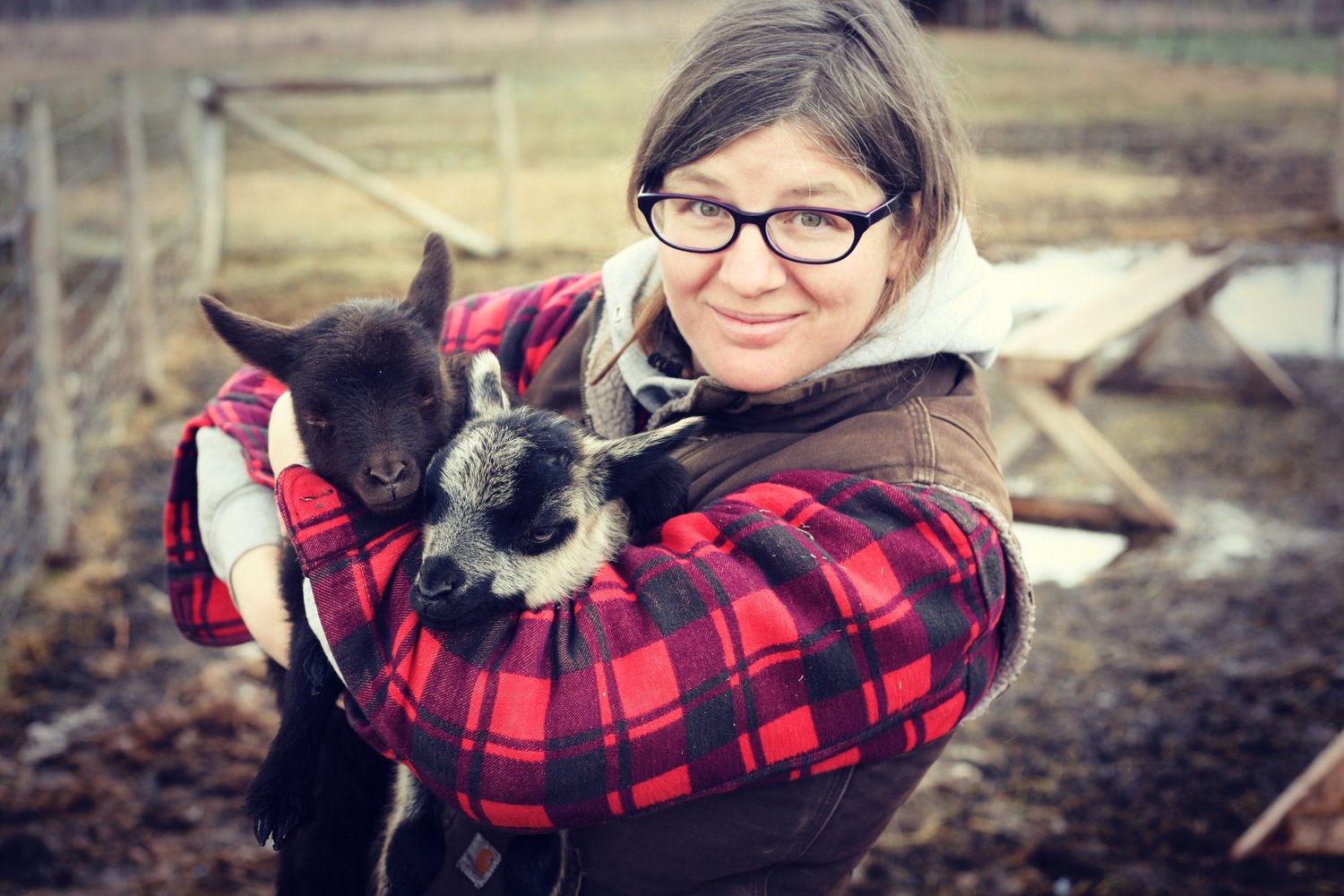
    Anna Hunter, is a farmer, public speaker, author, and owner of Long Way Homestead, a fibre farm and wool mill in Manitoba. She tackles the problems of building resilient fibre systems in Canada through the use of regenerative agricultural practices. There was a clear need from consumers who wanted to purchase their wool locally and there was a lack of wool mills for farmers to send their wool to be processed. People are becoming increasingly aware of their carbon footprint and want to know where their clothing and food is coming from. In the clothing industry, this is difficult to come by as evidenced from the tags on clothes we wear with names from countries around the world (in many cases where labour costs are low, largely due to poor working conditions and pay).

    Anna Hunter
    Photo sourced from: https://www.longwayhomestead.com/.

    Anna began her yarn and fibre entrepreneurial journey with a yarn business in Vancouver, named Baaad Anna’s. Her business there focused on locally produced and dyed wool- which was hard to obtain. After owning that business for five and a half years, Anna and her husband decided they needed a change, and moved to Manitoba in 2015 where they purchased land to start a sheep farm. After raising sheep for their wool, it was apparent that there was no local wool mills to process wool and produce yarn. This was the next challenge they took on- creating a wool mill from the ground up.

    “In Canada, we grow three million pounds of wool collectively as a country, and most of that is sent to China where it is turned into either clothing or rugs or yarn and then is shipped back to the companies that sell it.”

    – Anna Hunter

    To try and resolve this disconnect between growers, consumers, and makers, Anna and her husband decided to start their own mill, connecting people to the animals that grow the wool and eliminating the need for wool to be shipped around the world and back again, significantly reducing the carbon emissions that this process takes.

    Check out the video linked below, created by Range Finder, for some information and history of Long Way Homestead.

    Motivations for taking the steps to localise wool production where none previously existed came from Anna’s intrinsic motivation to solve problems and find solutions to needs. The connection between her passion and business has resulted in her success in this industry.

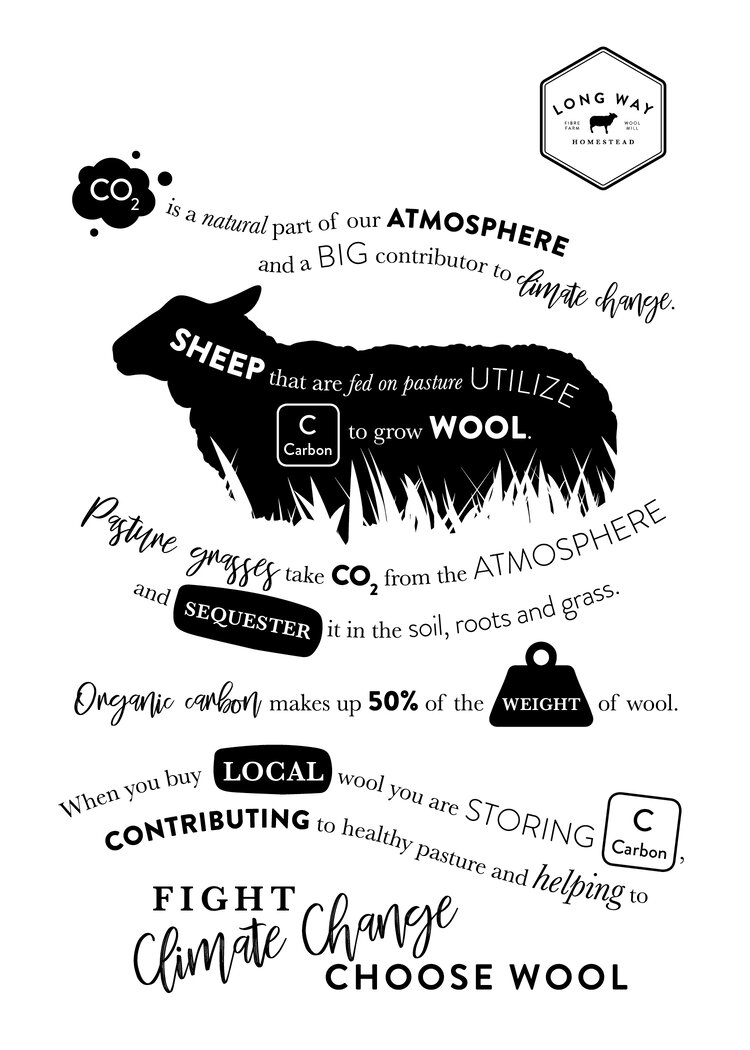
    Anna has conducted her own research on the Wool Industry in Canada, and has published the results via the Infographic pictured below.

    Infographic Sourced from: https://www.longwayhomestead.com/

    While there has been much success, Anna and her husband have had to overcome many barriers in the creation of their wool mill. From the lack of information and training, as no one else was doing this in the province, to capital and investment. Learning as they went, Anna and her husband have created a successful mill and now take their knowledge and teach others in this process.

    Recommendations for fostering creativity, innovation, and entrepreneurship from Anna include rooting in your own experiences and being authentic in what you do. Anna discussed how they rooted their business in the fact they they knew nothing about creating a wool mill and they shared the challenges they faced which brought people into their story. Their authenticity has allowed people to connect with their business.

    There are many ways in which Anna’s business has contributed to economic and environmental well being. With her yarn store in Vancouver back in 2009 (which sourced locally produced yarn) to Long Way Homestead today (which has allowed many farmers to have their wool processed locally), she helps people foster a connection to the animals and land that produce the wool. In the process, she enables people have control over where their clothing is coming from, thus limiting the overall environmental impact of her product. She also helps others implement regenerative agriculture on their farms through her Field School courses, which helps in our global quest to reduce our CO2 emissions in the atmosphere.

    Infographic Sourced from: https://www.longwayhomestead.com/wool-education-advocacy

    Today, Anna’s business encompasses many parts, from processing wool to yarn for many farmers around Canada, a Farm Store which sells locally made yarn, natural dye kits, mini wool pellets, and other merchandise including her book “Sheep, Shepherd, and Land.” Long Way Homestead also has a Breed Study which allows knitters to experiment with different types of yarn and fibre. This Breed Study helps protect at-risk species of sheep and helps support small farms that raise and breed wool from various breeds of sheep, once again, allowing consumers to have a connection to the source of their wool.

    Long Way Homestead also offers a Field School with different workshops and classes about topics including regenerative fibre farming, sustainable textile production, sheep, wool, and natural dyes, as well as hands on textile education.

    Anna has demonstrated determination, creativity, innovation, and growth to create and foster her business. She uses environmental principles to ensure that her business is helping the environment and then teaches others what she has learned along the way. This, to me, makes her an excellent example of a social entrepreneur and inspires me to take a closer look where my clothing is coming from and find ways to buy local as much as possible.

    Sources:

    Hunter, A. (n.d.). Local Canadian Wool. Long Way Homestead. https://www.longwayhomestead.com/

    Hunter, A., & Shulha, S. (2024, January 27). Social Entrepreneur . personal.

    YouTube. (2018, November 19). Longway homestead. Range Finder. https://www.youtube.com/watch?v=aTBClOCUGfI

    Zhao, Y. (2012). To create is human (Introduction). In World class learners: Educating creative and entrepreneurial students (1-22). Sage.

    (WordPress does not allow formatting for hanging indent, the proper formatting for APA)

  • Source of Vigour: The Winnipeg Wildflower Project

    December 10th, 2023

    Featuring Nicole Webster and Kelly Leask

    Logo designed by a Winnipeg Wildflower Project high school volunteer

    The local source of vigour in my community that I chose to feature is the Winnipeg Wildflower Project, run by Nicole Webster (Project Coordinator) and Kelly Leask (Founder). They have a goal of restoring urban spaces to native prairie habitat, which is considered to be one of the most endangered ecosystems. This small non profit consists of two people and a handful of volunteers, but has made a big impact in the local native plant community, influencing many people to grow native plants in their own gardens and opening minds to the idea of reducing lawns and increasing garden size.

    Nicole Webster (left) and Kelly Leask (right)
    Photo sourced from: https://www.winnipegfreepress.com/our-communities/east/2022/07/13/the-way-nature-intended

    Origins of the Project

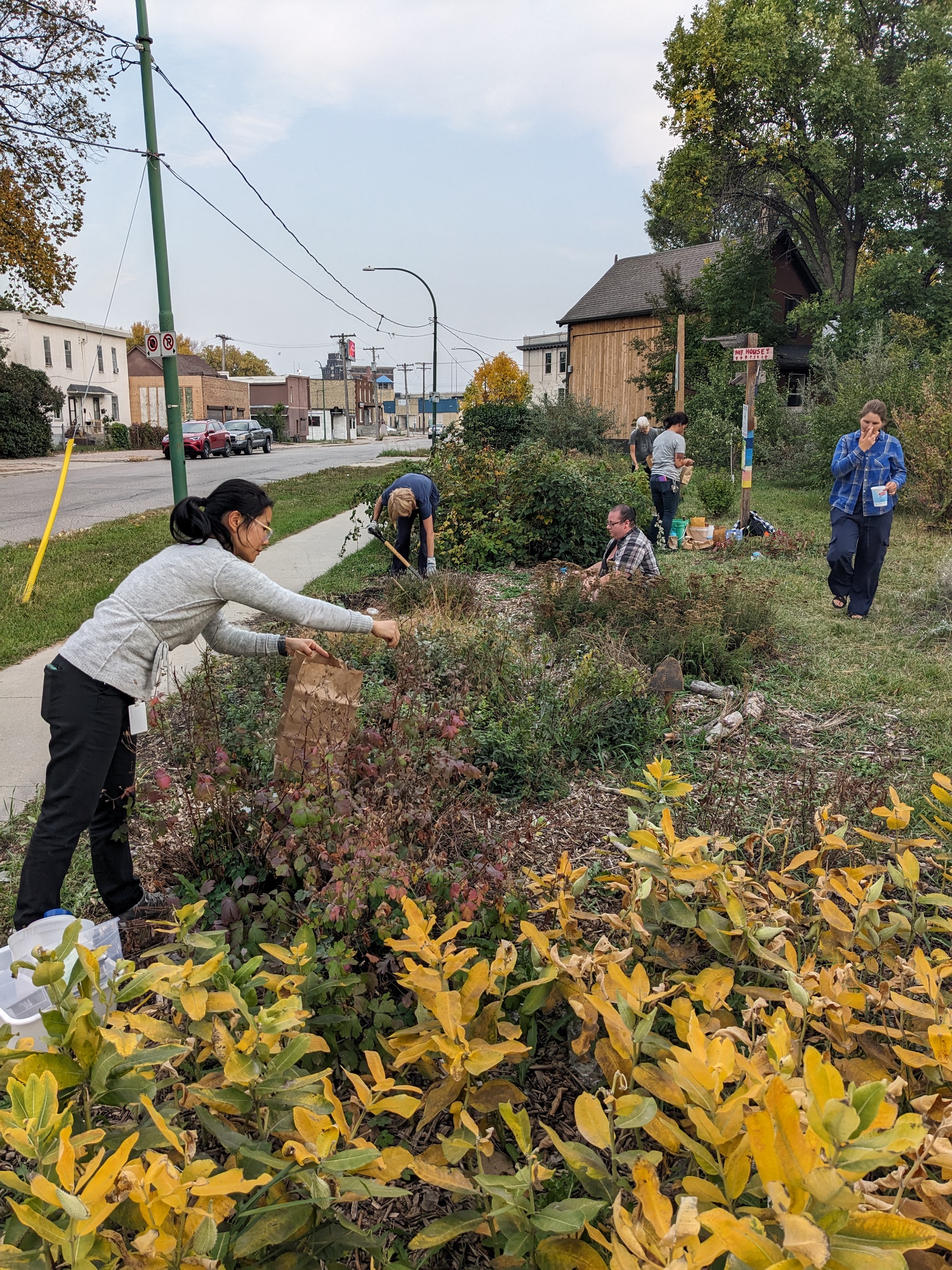
    The Winnipeg Wildflower Project began when a local business was evicted from their rental land which was owned by the Crown corporation, Manitoba Hydro. Erin Crampton, a local entrepreneur concerned with the local food movement, had rented land with Manitoba Hydro for many years for her small business and was forced to re-locate her shop. She was told she had to remove everything on the land, including the building, parking lot, and gardens. Erin and her husband are bird watchers and stewards of the environment and had made efforts to diversify the landscape on the space, planting a variety of plants and were disappointed to see their efforts be reduced to turning the land back into mowed lawn, void of any wildlife or habitats. Erin reached out to Kelly Leask, owner of Prairie Originals, a local native plant nursery, to see if she wanted to collect any seeds before Hydro mowed and removed all of the plants living there. Kelly had the idea to turn it into a community event to collect seed, inviting members of the community who were familiar with the Cramptons’ business, and amazingly, 75 people came to collect seed at this event.

    Erin wanted to leave the space in a good state, meaning a diverse, functional ecosystem- more than simply a field of weeds or mowed lawn. Erin reached out to Hydro to see if they would be willing to have the site restored or used for native seed plots. Hydro responded with a bunch of hoops to jump through.

    Kelly and Erin would have to form a formal organisation- a registered non for profit group and would have to provide all of the funding, volunteer labour, and any resources necessary to complete and maintain the project.

    In the end, even though both of these requirements had been met, the project was unable to be fulfilled, because Manitoba Hydro had a last minute change of heart, and could not allow the project to proceed because they claimed to have a responsibility to their clients and a tall grass prairie would impede with accessing their power lines. Hydro suggested they reach out to the Bishop Grandin Greenway (Abinojii Mikanah) to see if they have a spot that would work for their project.

    During the time when Kelly was in communications with Manitoba Hydro in hopes of revitalising the old Cramptons site, Nicole Webster , an environment enthusiast, and now project coordinator of the Winnipeg Wildflower Project, had recently completed the Canadian Conservation Corps program and was looking for a community service project focused on conservation.  Nicole had already applied for funding and received $1500 dollars for a restoration project. Nicole reached out to the Greenway and they accepted her proposal, and within two weeks they were getting started on the project.

    Projects Completed

    Since the project’s inception, the Winnipeg Wildflower Project has completed five garden projects:

    “1.) Bishop Grandin Greenway: This seed plot site was planted in 2019 in the north west corner of Bishop Grandin and St. Mary’s. It’s located along the active transportation path. These plots were made possible with a #RisingYouth grant from Taking It Global. Find the site here!

    2.) Point Douglas: This seed plot site was planted in 2020 at the Euclid Food Forest located on Euclid Avenue. These plots were made possible by donations from supportive community members. Find the site here!

    3.) Transcona: This garden was planted in 2021 in Rotary Heritage Park along Plessis Avenue, located along the active transportation path. The garden was funded through the Land Dedication Reserve Fund with support from City Councillor Shawn Nason. Find the site here!

    4.) Waterfront: This garden was planted in 2021 in Fort Douglas Park at Waterfront Drive and Alexander Avenue. Funding was provided through TD Park People. Find the site here!

    5.) Wellington: This garden was planted in 2022 in Sir John Franklin Park at Wellington Crescent and Lindsay Street. The garden was funded through the Land Dedication Reserve Fund with support from City Councillor John Orlikow. Find the site here!” ( Winnipeg Wildflower Project, 2023).

    (Honorary Mention) Chief Peguis Millennium Gardens: The WWP helped to plant at this site, but are not responsible for general maintenance.

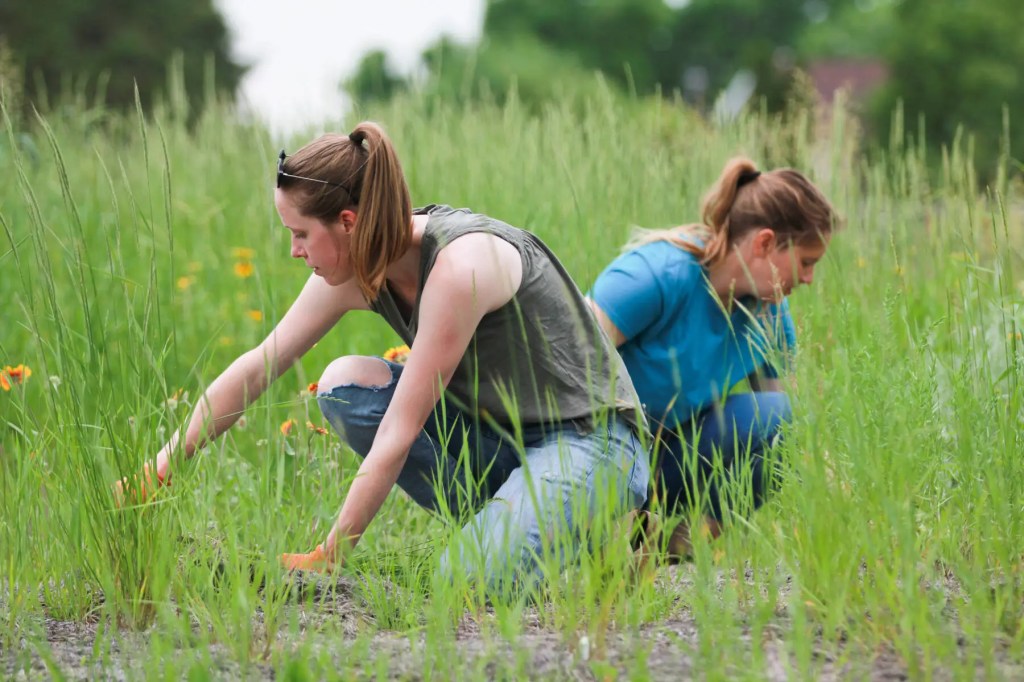
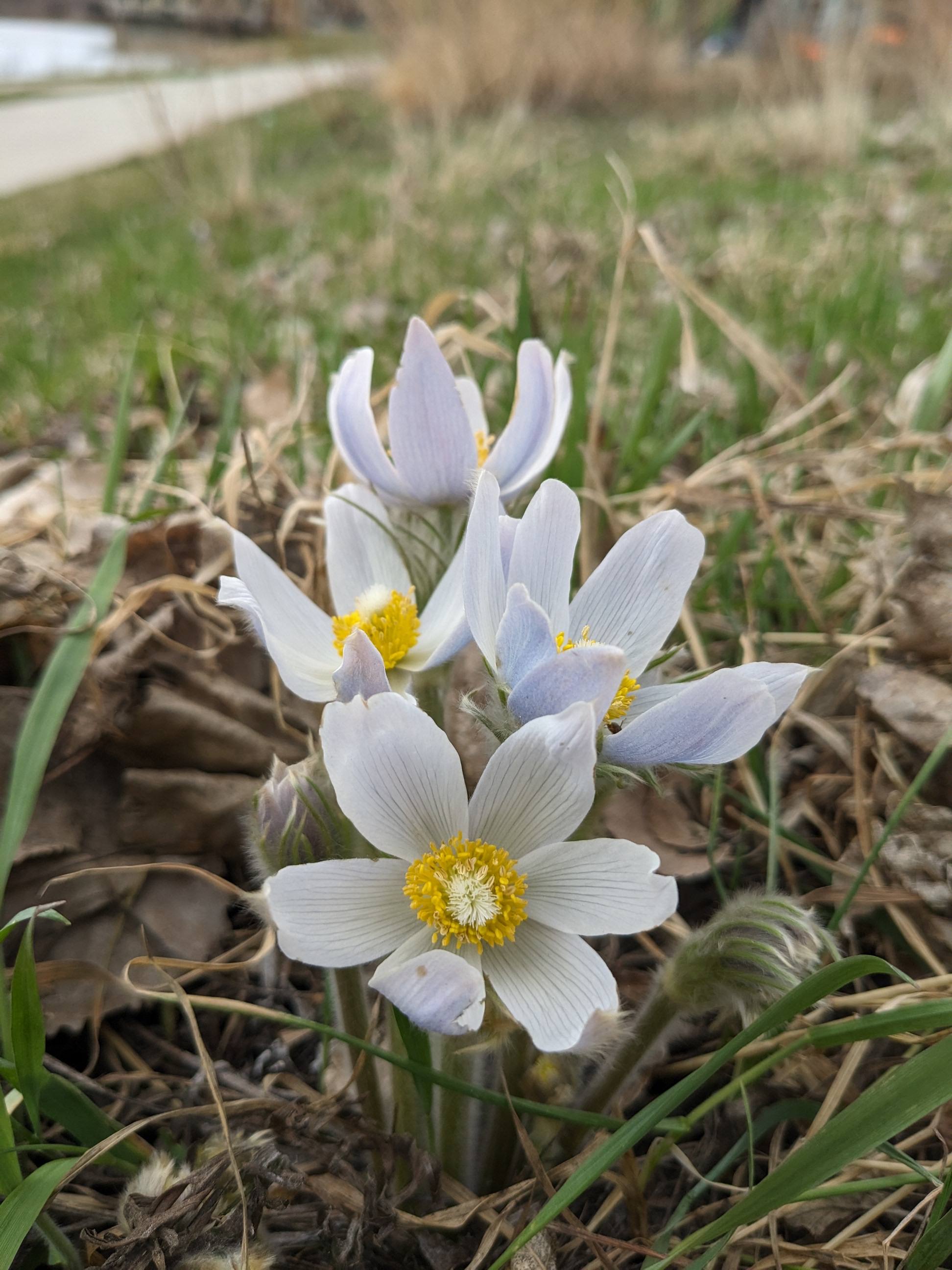
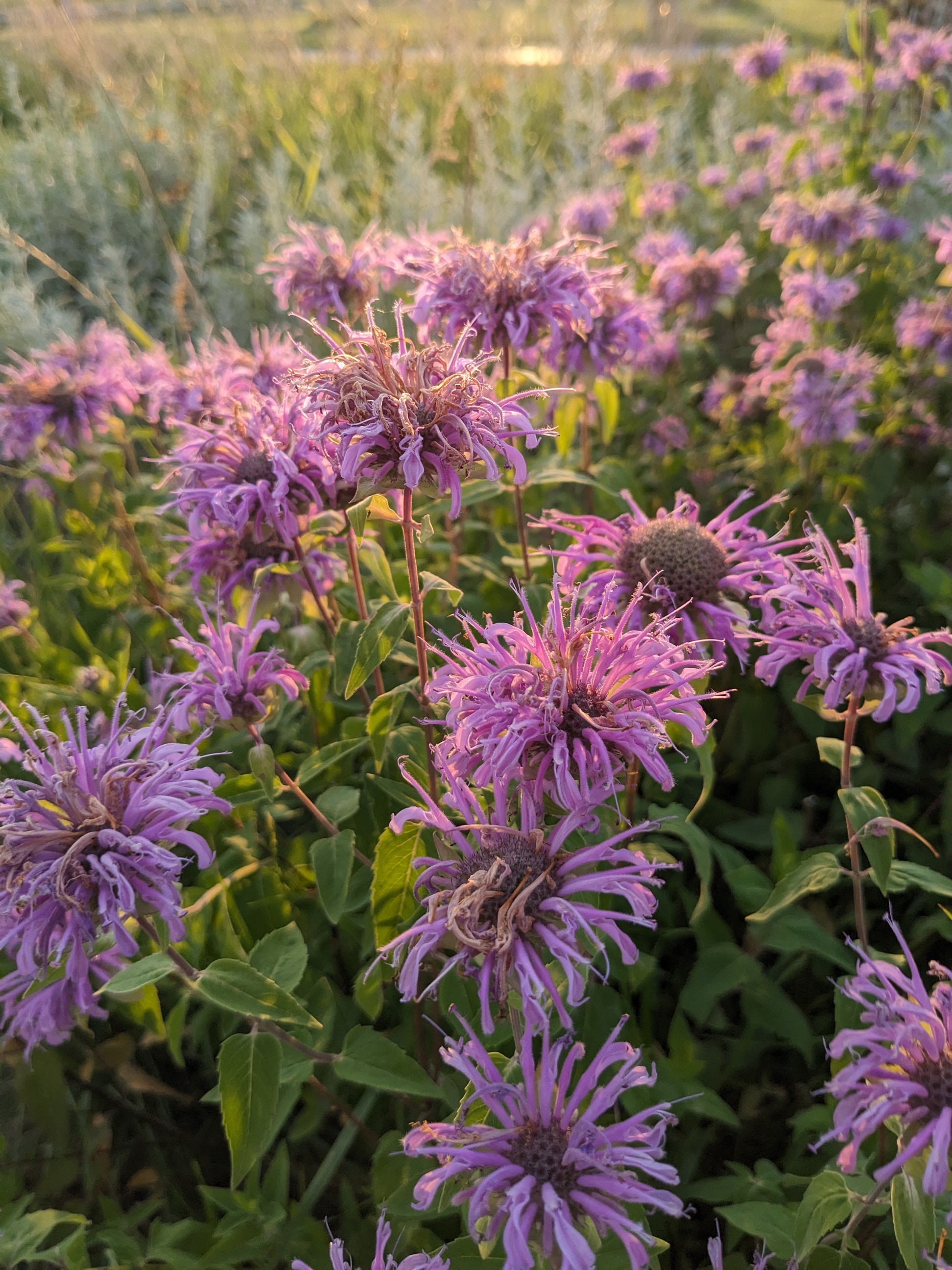
    Each site has approximately 20-25 different species of plants native to Manitoba, which in turn attracts pollinators native to Manitoba as well. These gardens differ from typical city gardens in that these plants are perennials and are more hardy then the annuals typically planted by city gardeners. Once established, native plants don’t require watering as they are adapted to the climate of the prairies. They have deep root systems which also have the power to sequester carbon, yet another benefit of native plants!

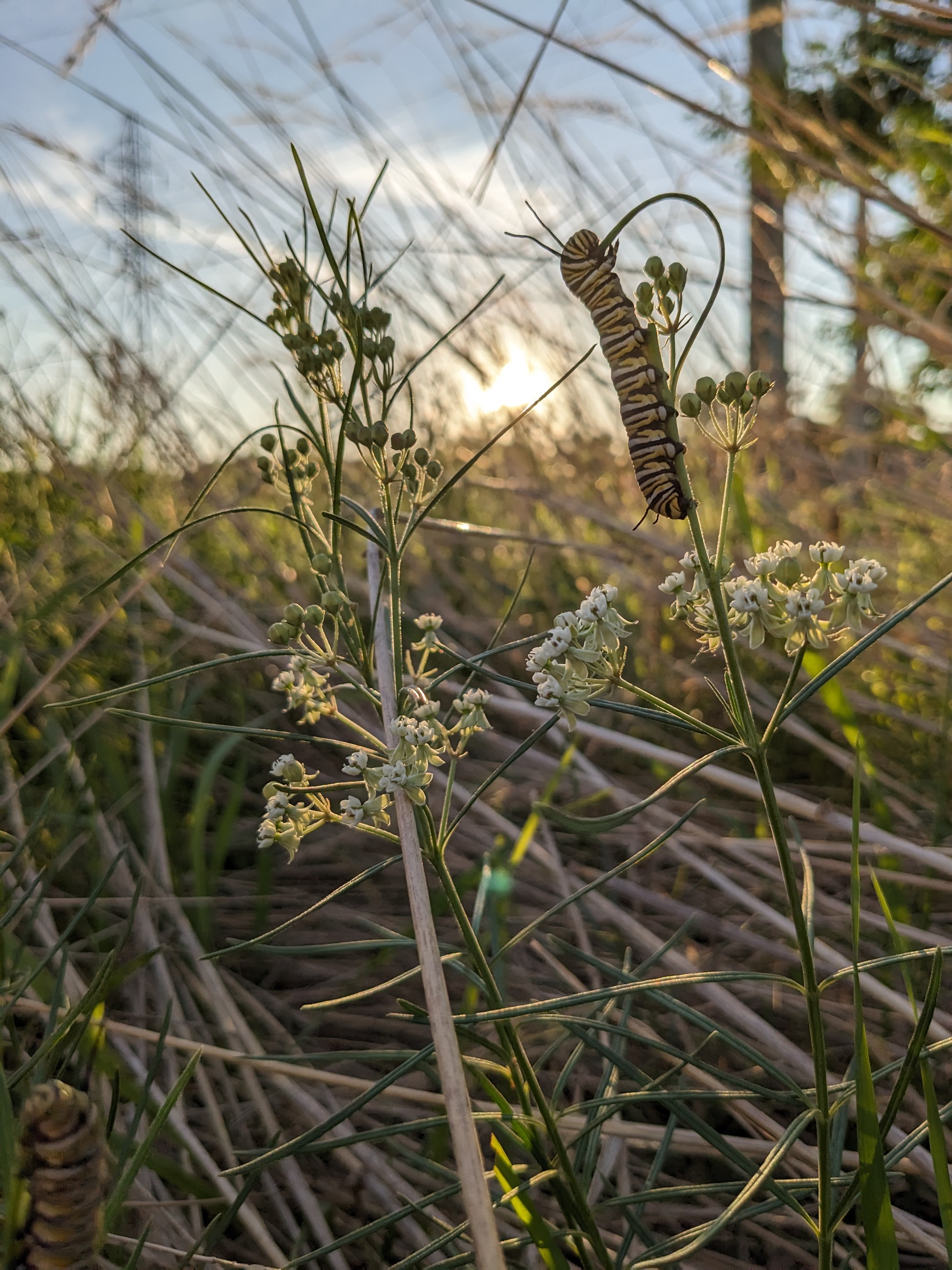
    The photos below are courtesy of Nicole Webster and highlight just a few of the flowers and insects that are now home at the various garden sites.

    Challenges

    While it is easy to focus on the positives that has come about through the creation of these community gardens, it is important to discuss the challenges that small, volunteer based organisations face.

    During my discussion with Kelly and Nicole, they identified the following as the main challenges:

    • Finding volunteers who are local to each site that are committed to the ongoing maintenance of the site
    • Invasive species finding their way to the garden sites, resulting in the need for continuous weeding
    • Trying to inspire and support people to create the gardens in their local community
    • Finding funding. You have to put in a lot of effort with grants and you never know if you will receive it. Grants usually apply for new projects only, not many organisations fund the maintenance of ongoing projects.

    Successes and Favourite Moments

    Aside from the completion of five garden sites, some of Kelly and Nicole’s biggest successes and favourite moments from their four years of volunteering with the WWP include:

    • New friendships gained from the committed volunteers
    • Local news outlets have picked up on the work the WWP is doing and have featured them on a few occasions. Check out this link for a short 1 min 15 second clip from CTV on the seed packet distribution initiative and the goal of the project: ‘We want to re-wild the city a little bit’ | CTV News.
    • Featured in the Our Community section in the Winnipeg Free Press, linked below:
    The way nature intended
    https://www.winnipegfreepress.com/our-communities/east/2022/07/13/the-way-nature-intended
    • Inspiring a city councillor to take the initiative to plant native species along a local greenway (independent from the WWP). The City of Winnipeg prepped and planted the area.
    • Goldfinches found the narrow leaf sunflower seeds and used them as a regular food source at the Waterfront garden.
    • Monarch butterflies found the milkweed at 5 out of the 6 sites and can now be spotted throughout the summer, using the milkweed to lay their eggs and provide food for the growing caterpillars.
    • Community members have shared stories about they have successfully grown and planted seeds that they have collected from the gardens.
    • The WWP has given away thousands of seed packets for people to start their own gardens.
    • The WWP has been interviewed for the David Suzuki Foundation’s documentary “The Butterflyway Diaries” (and are featured at 0:18-0:19 in the documentary trailer linked below.) For more information the Butterflyway Project, check out the link: https://davidsuzuki.org/take-action/act-locally/butterflyway/
    • The grand finale of the season was seed bombing a riverbank on the final seed collecting day.
    • The habitat creation and seeing the wildlife that finds the gardens.

    Community Connections

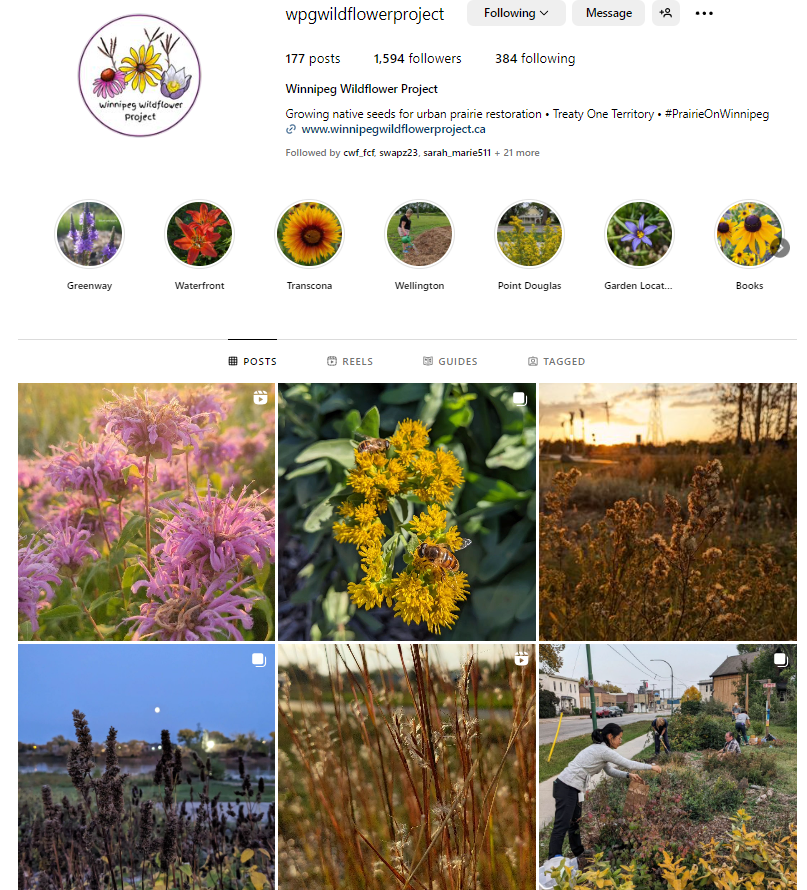
    Throughout the summer months via Instagram, Nicole posts the times she will be at each of the sites and asks for volunteers to assist with various jobs including: planting and watering (with new projects), weeding (established sites), and seed collecting (in the fall).

    https://www.instagram.com/wpgwildflowerproject/

    The group has received compliments from local people in the area and has connected with different community organisations, schools, libraries, and cafes, to distribute seeds collected from the sites. 

    The Winnipeg Wildflower Project website has a list of many great resources for people to find information on where to purchase native plants, useful books to help with plant identification and gardening, as well as videos and podcasts on native plants.

    After seeing the benefits of planting native plants, I myself, have planted native plants in my home as well as at my school. I applied and received a grant from TD Friends of the Environment Foundation, to create a raised garden bed for a native pollinator garden. It is awesome to see the monarchs and other pollinators find the garden after only a few short years.

    Conclusion

    Since it’s inception, the Winnipeg Wildflower Project has been featured in newspapers and has been interviewed with the local news. They have been influential in the native plant movement in Winnipeg (and beyond city limits). Their goal is to inspire everyday people to plant native plants in their own backyard to provide essential and critical habitat for native pollinators (and if you don’t have a backyard of your own, help volunteer at one of the WWP sites). Nicole and Kelly’s dedication and passion for native plants and the various insects and animals that call these gardens their home is nothing short of an inspiration. They have put in countless hours in these gardens in different areas of the city to allow others to experience the joy these plants provide.

    Sources:

    The butterflyway project. David Suzuki Foundation. (2023b, November 21). ________https://davidsuzuki.org/take-action/act-locally/butterflyway/

    Canadian Wildlife Federation. (n.d.). The Canadian Conservation Corps. ________https://cwf-fcf.org/en/explore/conservation-corps/

    CTV News Winnipeg. (2023, March 6). ‘We want to re-wild the city a little bit.’ ________CTVNews.ca. https://www.ctvnews.ca/video?clipId=2642139

    David Suzuki Foundation. (2023a, February 7). Trailer: The butterflyway ________diaries. YouTube. https://www.youtube.com/watch?v=bAyqKr-lMJc

    Prairie originals – native prairie plants – prairie originals – native prairie plants ________and seeds. Prairie Originals – Native Prairie Plants – Prairie Originals – ________Native Prairie Plants and Seeds. (n.d.). ________https://www.prairieoriginals.com/

    Shulha, S., Webster, N., & Leask, K. (2023, November 17). Winnipeg ________Wildflower Project Interview. personal.

    Streilein , K. (2022, July 13). The way nature intended. Our Communities. ________https://www.winnipegfreepress.com/our-________communities/east/2022/07/13/the-way-nature-intended

    Webster, N. (n.d.). Winnipeg Wildflower Project. ________http://www.winnipegwildflowerproject.ca/

  • Consumption and Consumerism Journal

    November 12th, 2023

    Throughout my life, I have always been one to save money. This habit has benefited me with not over buying when shopping, always asking myself, do I really need this?  I am always trying to save money as well as not be wasteful or over indulgent, but I have learned that I am not immune to the endless ads that I cross paths with everyday through Instagram, Facebook, YouTube, and Emails.

    In Part One of this post, I take a look at a couple weeks of my life and look at my habits, activities, and purchases made. In Part Two, I reflect, and look at what changes I can make in my daily life to look at what is really necessary, considering the difference between wants and needs.

    Part One: Daily Journal of Consumption

    Monday, October 23, 2023: Regular work day. Purchase of Chef’s Plate Meal Delivery service was delivered, which consists of supplies for three dinner meals.

    Tuesday, October 24, 2023: Regular work day, no purchases made.

    Wednesday, October 25, 2023: Regular work day, no purchases made.

    Thursday, October 26, 2023: Regular work day, no purchases made.

    Friday, October 27, 2023: Regular work day, curling in the evening. No purchases made.

    Saturday, October 28, 2023: Attended Bowling Social in the evening- purchased dinner at McDonald’s on the way. Purchased one drink at the event and purchased silent auction tickets (didn’t win anything). Saw a sponsored post on Instagram about a magazine that I was tempted to purchase from Celebrity Magazines.com that was a memory book of the Taylor Swift concert I attended in June. (Did not end up purchasing it)

    Sunday, October 29, 2023: Costco winter tires purchase. Bought lunch at Costco while waiting for tires to be changed. While at Costco, I bought regular groceries and bought Pokémon Halloween cards (an unnecessary purchase, but was on sale) for my students. In the afternoon, I delivered the 70 pumpkins to my school that I grew in my garden. I stopped at the car wash and washed the car and purchased dinner on the road at the local convenience store in town for the way home.

    Monday, October 30, 2023: Purchase of Chef’s Plate Meal Delivery service was delivered, which consists of supplies for three dinner meals. Started to feel ill in the evening and missed yoga.

    Tuesday, October 31, 2023: Woke up feeling very ill, could not go into work.

    Wednesday, November 1, 2023: Ill, could not go into work.

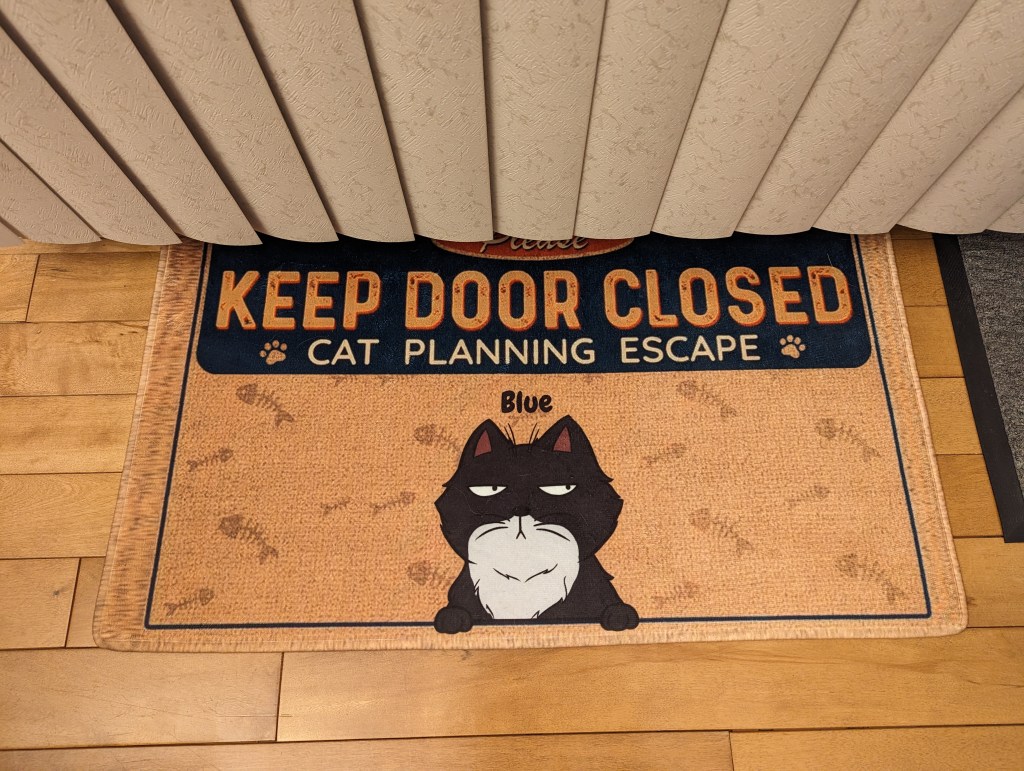
    Thursday, November 2, 2023: Ill, could not go into work. Online order arrived: Custom doormats with our cat’s picture on it, warning people to not open the door as he will escape.

    Friday, November 3, 2023: Ill, could not go into work. Had to miss a concert I had already paid for.

    Saturday, November 4, 2023: Ill, had to miss movie I had already purchased ticket for.

    Sunday, November 5, 2023: Ill, slowly starting to get better. Purchased tickets to the “Beyond Monet Experience” which is an event happening in December.

    Monday, November 6, 2023: Went to work for half a day, was still ill so went home early. Spent the afternoon resting. Online purchase arrived: “The Big Cheese” picture book (purchase made for my classroom teaching). I have all of the other books in this picture book series and use them as a mentor text for a writing project for my students.

    Chef’s Plate Meal Delivery Service got delivered which include meal kits for three dinners.

    Tuesday, November 7, 2023: Regular work day, got a last-minute doctor appointment. Went to Costco to fill prescription and did some grocery shopping. Purchased new windshield wiper blades, cat treats, kombucha, frozen pizza, pears, and dish soap refill. Most of these items were on the list to purchase but some were influenced by sales.

    Wednesday, November 8, 2023: Regular work day, no purchases made.

    Thursday, November 9, 2023: Snow Day, so no school! No purchases made. (Unfortunately, I did not receive a code to purchase tickets to Taylor Swift’s Eras tour in Vancouver happening next December, so I was unable to purchase these tickets. I would have otherwise.)

    Friday, November 10, 2023: Regular work day, purchased outdoor composter from Amazon (had been watching the price for a few months and a warehouse sale went on today, so made the purchase).  

    ……………………………………………………………………………………………………………………………………

    Throughout these two weeks, I have been bombarded by ads from nearly all social media platforms I have including Instagram, Facebook, YouTube, and Email. Although I did not make any purchases from any of the Ads that I came across, they are very good (most of the time) at tailoring the Ads to things that I am interested in or of similar products that I have purchased in the past.

    Instagram ads: My most used App. I counted an ad between every 3-5 posts from people/pages I chose to follow. Some of the Ads were from: Prose, Chatbooks, dysportcanada, llbean, poppy_peonies, thepawfecthouse, retrokid_to, gossbyglobal, sheertex, halara_offivial, the list goes on…

    As you can see, these were just some of the Ads that I came across within a 4 minute time span on Instagram. While unfollowing some accounts that are mainly used for advertising can help, that doesn’t eliminate the Sponsored posts that come up between the posts from people you follow.

    Facebook Ads: I get an ad between every five posts of people/pages I follow. Some of the companies I received ads from are: Prose, Halara Leggings, Audible, Halara, BloomChic Dress, WayFair.  (I have never purchased anything from any of these companies before.)

    YouTube: I pay for a YouTube Premium subscription which means that I don’t see the banner ads and the commercials that play at the start and throughout the videos, but many of the YouTube channels I watch are sponsored by a product or company that the Youtuber is paid to advertise and promote their product.

    Emails from the following companies (some of these sending daily emails) advertising products or sales happening in their stores: Popflex, American Coaching Academy, Clarks Shoes, Modo Yoga, Novel Effect, Vita Health, Signatures Handmade Market, Cineplex, WhattaCharmer, Bath & Body Works Canada, Scene +, Scholastic Book Clubs, Reitmans, cuddle+kind, Not So Wimpy Teacher.  

    ……………………………………………………………………………………………………………………………………

    Part 2: Reflection and Goals

    After looking at various aspects of my spending and consumption habits for a couple weeks, I have learned that although I am tempted, I do not often make the purchases of items that advertisers hit me with. Also, it turns out that being sick and not leaving home, really reduces the need to make purchases, which is what happened to me one of the weeks I was documenting my spending habits.

    Mulligan’s chapter on Consumption and Consumerism is a good starting point for anyone looking to begin taking a critical look at your own consumption habits and looking at the hidden costs that come with living in a society that is known for over consuming. Simply being more mindful of the purchases you are making, using up what you have first, and trying to repair instead of buying can make a big difference.

    Going forward changes to make:

    Goal: change how Christmas gifts look at home

    With the holidays approaching, I find November and December to be some of the hardest months for over consumption with food, treats, drinks, and often frivolous purchases in the name of gift giving. One change that I have started in the past two years with my husband is giving the gift of experiences instead of physical gifts. For example, last year I picked out two unique restaurants that we have never been to and gave a note with cash to be spent at that restaurant. The cash was an intentional choice over a gift card to the restaurant to avoid the plastic of the physical gift card as well as to eliminate the need to spend extra to use the full amount of the gift card, as these are places that we wouldn’t normally go to. I received tickets to a comedy show that I would normally not have justified purchasing the tickets for. We both appreciated the thought that went into picking out the restaurants and activity and are looking forward to this year’s activities.

    Goal: Lessen Instagram usage and unfollow pages that are solely advertising for products

    Every so often I go through all of the pages that I follow and unfollow the ones that are mainly advertising or ones that I feel are influencing me to make purchases that are not necessary in my life. I plan on increasing the frequency in which I unfollow these accounts and hopefully this will end up in not being on the platform as much. In line with the unfollowing of pages on Instagram, I need to go through my emails and unsubscribe from the many companies that got my email address to slowly reduce the amount of emails that I get everyday.

    Goal: Composting

    I am sad to admit that I have only diligently started composting all of my indoor food waste this summer with the purchase of a FoodCycler machine through my local municipality. This device has made composting indoor waste much simpler and the compost is ready to be put into the garden after a few hours of being in the machine. Over the winter I will store the finished compost in a bin, and work it into the garden in the spring. One of my recent purchases I made in the past week is a large rotating composter which will be used for outdoor plant and garden waste. I am excited to get started on the outdoor compost in the spring.

    Goal: Eating locally and more seasonally

    One of the reasons for moving outside of the city was for the increased yard and garden size.  The book “Animal, Vegetable, Miracle” by Barbara Kingsolver is an inspiration for supporting local and eating seasonally. In this book, we follow Barbara and her family in their journey of eating locally, seasonally and growing and preserving their own food. Although this concept is very challenging for those of us to live in colder climates to simply go without the foods that you cannot grow locally, it did give me lots to think about, and simply reducing foods that have been imported can make a difference.

    It sounds simple, but simply using up items I have in the fridge, freezer, and pantry before buying more, even if it is on sale, is something that I need to work on. One item that I don’t have that my husband and I have been debating between is having a large freezer. On one hand, freezers tend to fill up with items, people forget what they have, and it ends up going bad and freezer burnt. On the other hand, increased freezer size could allow us to store the fruits and vegetables that we grow in our garden and use throughout the winter months, which would reduce the vegetables bought out of season. Both sides have valid points.

    These past couple weeks of intentionally reflecting on my consumption habits is an activity that I would recommend to anyone looking to reduce their spending and become aware just how influenced we are by the advertising we are hit with on a daily basis. For those interesting in living more sustainably, the David Suzuki Foundation has many links to articles with practical tips to reduce consumption and live green.

    References:

    Chung, E. (2019, December 19). The gift-card conundrum: Convenience with ______an environmental cost | CBC News. CBCnews. ______https://www.cbc.ca/news/science/what-on-earth-newsletter-gift-card-______holidays-1.5402807

    Kingsolver, B., Hopp, S. L., & Kingsolver, C. (2008). Animal, vegetable, _______miracle: a year of food life. 1st Harper Perennial ed. New York; _______Toronto, HarperPerennial.

    Living green. David Suzuki Foundation. (2023, October 25). _______https://davidsuzuki.org/living-green/

    Mulligan, M. (2018). An Introduction to Sustainability: Environmental, _______Social, and Personal Perspectives. Routledge. _

    Tips to help you lower your consumption. David Suzuki Foundation. (2023, _______September 14). https://davidsuzuki.org/living-green/tips-help-lower-_______consumption/

    ______

  • The Carbon Cycle

    October 22nd, 2023

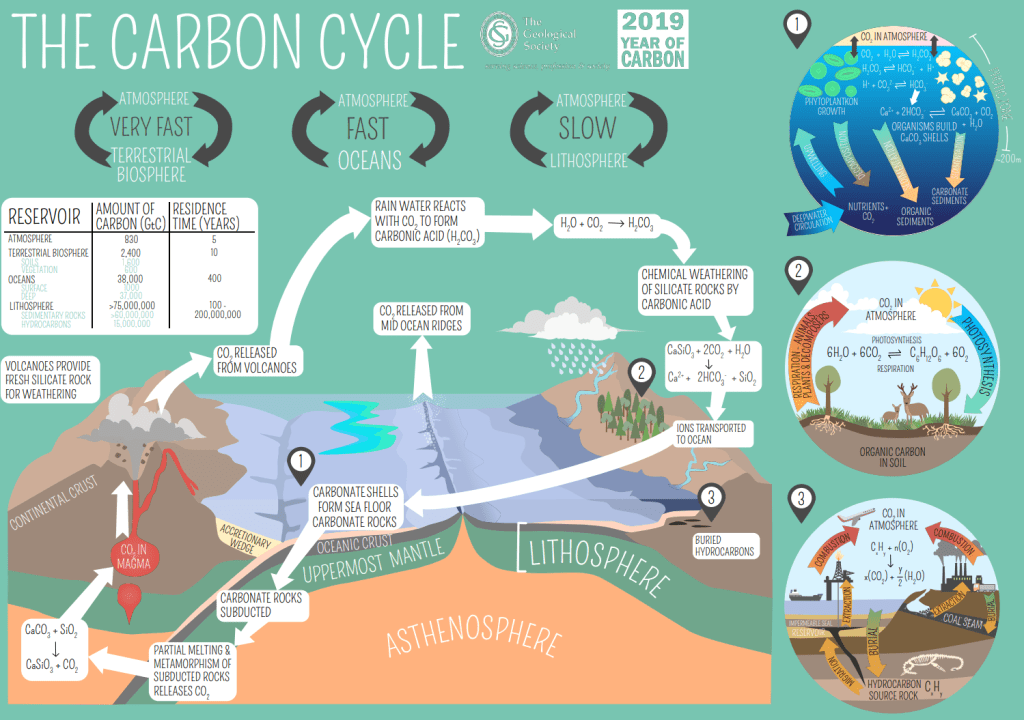
    The carbon cycle is one of the natural biogeochemical cycles taking place on planet Earth and is one of the building blocks for all living things. Carbon can be found in rocks, soil, the ocean, fungi, microbes, and all living things.

    https://www.geolsoc.org.uk/~/media/shared/documents/education%20and%20careers/Resources/Posters/Carbon%20cycle%20poster.pdf?la=en

    Carbon is in constant motion, being moved from one reservoir to another by various processes from plants taking in carbon to make food, the process known as photosynthesis, to humans and animals exhaling. Because the carbon cycle is a closed system, the amount of carbon does not change, but the amount stored in the various reservoirs does. It is part of the natural cycle for carbon to be stored in different parts of the Earth including water, rock, and soil underground, and then released to the atmosphere from volcanoes erupting, forest fires, shifting of continental plates, respiration, and ocean processes. This natural process has been disrupted by various human activities such as the extracting and burning of fossil fuels which is the cause of the increasing carbon dioxide in our atmosphere, causing climate change. Nathaniel Manning’s educational video linked below describes the carbon cycle and how carbon moves through its cycle as well as how humans have impacted this cycle in a negative way.

    The Economist created a very informative and succinct video on the carbon cycle that I have linked below. In a short summary of said video, planet Earth has numerous carbon sources and sinks. Carbon has flowed through these various sources and sinks maintaining its own equilibrium with plants, bacteria and algae taking in carbon dioxide, and humans and animals exhaling carbon dioxide through respiration. This equilibrium has been disrupted through human industrial activities.

    Robertson (2021) describes the carbon cycle in their book Sustainability: Principles and Practice by the following: “Plants take in water from the soil and carbon dioxide from the air and from them “put together” sugars and oxygen. Plants that are eaten by other organisms become part of eating sequences known as food chains. When terrestrial plants die or when the animals who ate them die, the carbon originally captured from the air is broken down by microbes and becomes part of the soil. In warm weather, some of it rises back into the air as carbon dioxide. Oceans absorb carbon dioxide from the air by folding it into the water through wave action and by the work of tiny algae who pull it into the first stage of the ocean’s food chain. Rocks are the planet’s largest carbon reservoir. Earth’s atmosphere and plants on land are also carbon reservoirs” (25).  

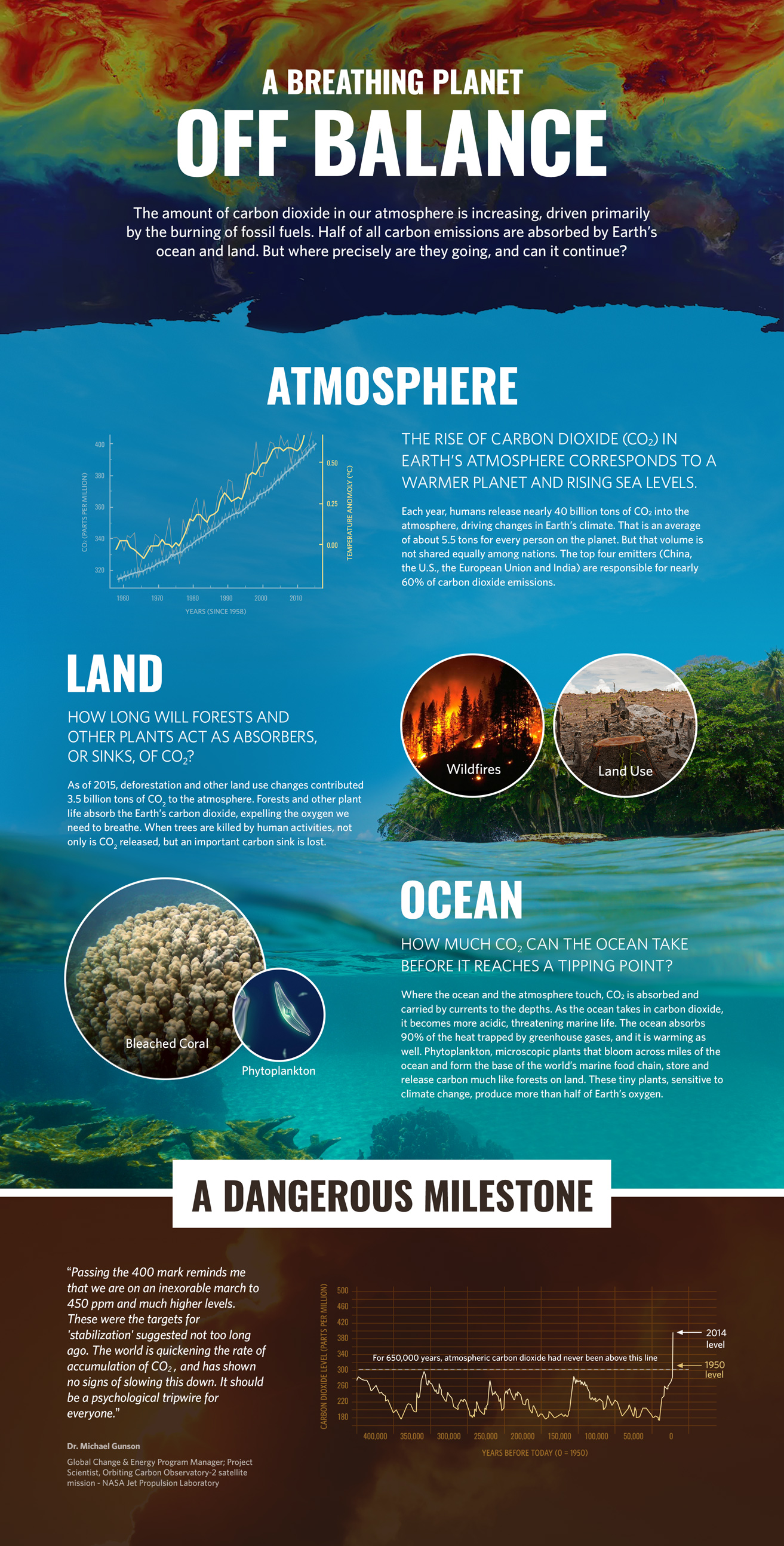
    No matter what book, article, video, or documentary you consume on the carbon cycle, the end message is always the same. Our planet’s carbon cycle is off balance.

    Infographic Sourced from: Infographic: Earth’s carbon cycle is off balance – Climate Change: Vital Signs of the Planet (nasa.gov)

    Knowing what we know now about the carbon cycle, we know that humans are the main cause of the major disturbance of this cycle and the balance that was once there. The digging up and burning of fossil fuels is the cause of this imbalance. I find that although it is important to learn about the causes of climate change, it is equally important to discuss possible solutions and what is currently being studied and done to try and fight back. One of the main themes that kept coming up for me in my research on this topic was that of carbon sequestering. Check out this short clip to explain carbon sequestration below:

    There are various ways that humans can help with the sequestering of carbon from reforestation, regenerative farming, to restoring native prairie grassland habitats.

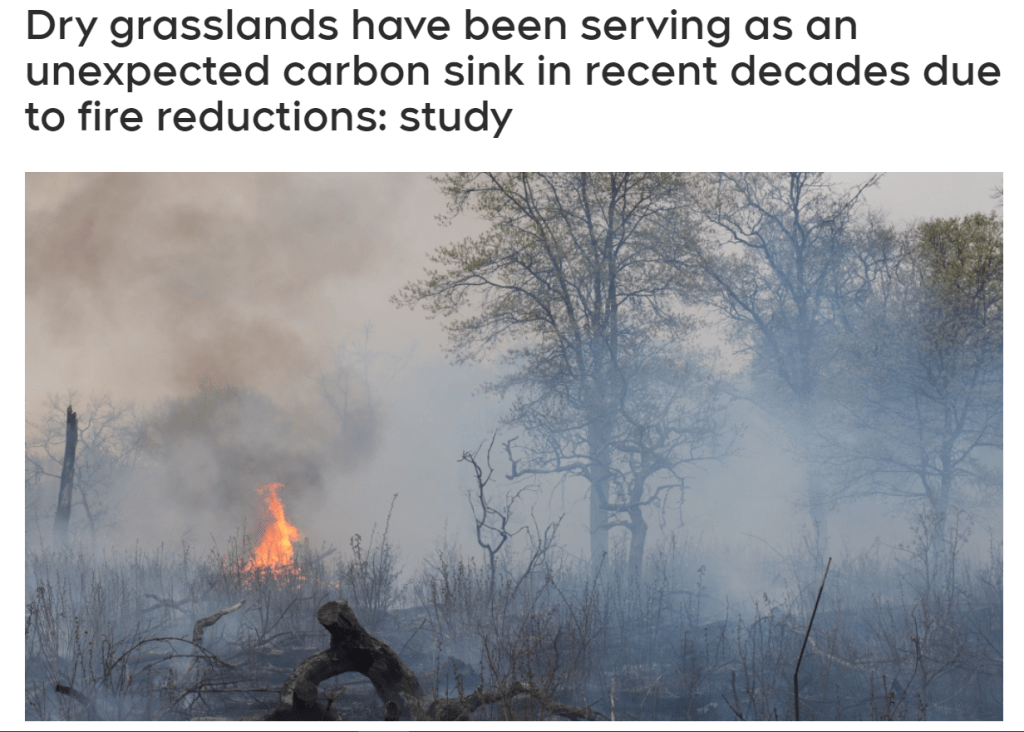
    One of the sources of carbon going into the atmosphere is forest fires. In a recent article by CTV News, Jones (2023) discusses how researchers have found that dry grasslands have been serving as a significant carbon sink. In some areas where forest fires have become less frequent due to development, more carbon has been allowed to be accumulate and be stored in the plants themselves as well as the topsoil in these undisturbed areas. More fires results in more soil carbon loss. This information is useful when planning for nature-based interventions to slow global warming.

    Source: CTV News, October 3, 2023
    https://www.ctvnews.ca/climate-and-environment/dry-grasslands-have-been-serving-as-an-unexpected-carbon-sink-in-recent-decades-due-to-fire-reductions-study-1.6586228

    According to the article “Meet the People saving Canada’s native grasslands,” published on the website The Narwhal,

    “Grasslands sequester billions of tonnes of carbon and support hundreds of plant species and over 60 species at risk. They are also one of the world’s most endangered ecosystems.” – Steph Kwetásel’wet Wood

    Meet the people saving Canada’s native grasslands | The Narwhal

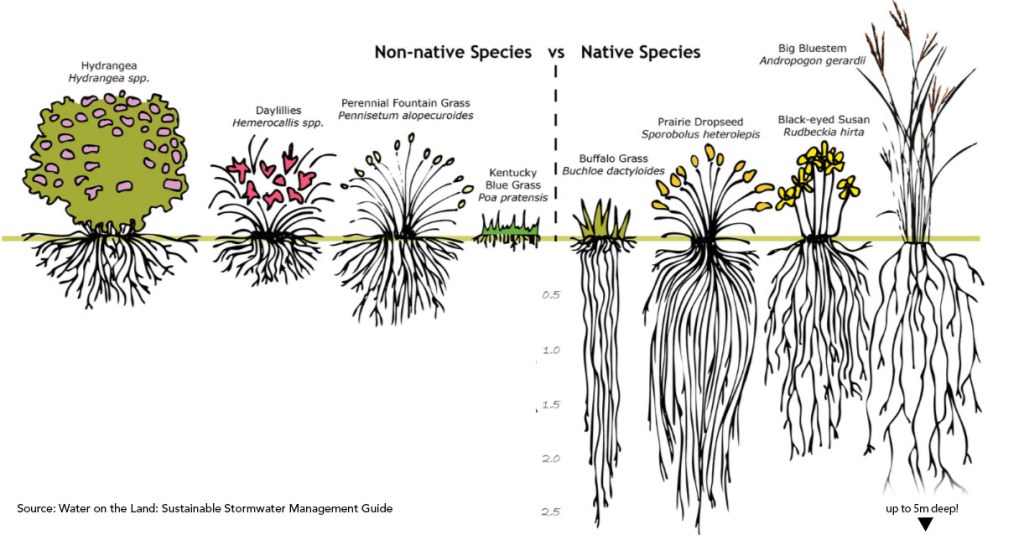
    Wood claims that this often overlooked ecosystem could have a major impact in the battle of combating climate change through carbon sequestration. She explains that over the past 150 years, between 75 and 90% of Canada’s grasslands have been eradicated largely due to agriculture and development. Due to their extensive root systems adapted for reaching deep into the soil to reach moisture during drought, native plants have a great carbon storing potential. According to Wood, grasslands have the potential to store 180 tonnes of carbon per hectare. Unfortunately, when grasslands are cultivated they lose up to half of their stored carbon and are also unable to offer the habitat to many species of native plants, insects, and animals.

    Source: https://www.qualicocommunitieswinnipeg.com/our-commitment/native-plants-grasses

    Although there is much work to be done in this area of native prairie restoration which would benefit not only native plants, insects, and animals, but the global carbon cycle as a whole, there has been some improvements and in this area. Some city planners and developers are incorporating native plants in their community plans whether that be around retention ponds, community gardens, or on boulevards. It is unfortunate the as a society, we value the typical green lawn of Kentucky Blue Grass which requires a lot of maintenance through weeding, watering, and mowing and provides little to no habitat for insects or much of a root system for carbon sequestration. Small changes have the potential to make big impacts. I personally have a goal of incorporating native plants into my own yard and school gardens and have already seen the benefits of planting these species as they provide a great alternative to annuals that are pulled out at the end of each growing season causing disruptions to the soil.

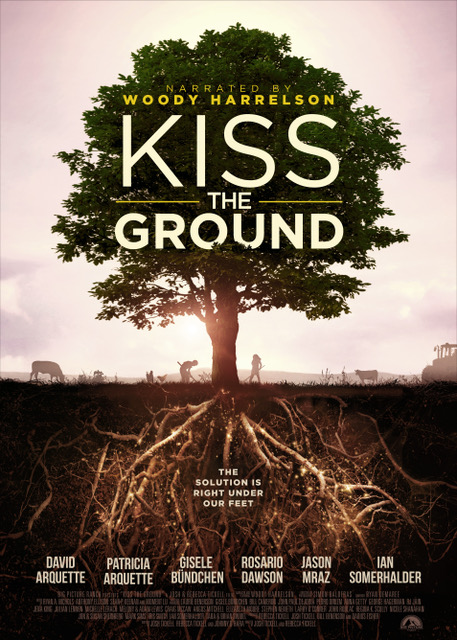
    Soil health has such a large component in carbon sequestration. In modern times, humans have done considerable damage to our soils through agriculture by the spraying of chemicals such as pesticides and plowing and tilling the soil, leaving it exposed and prone to drought, leading in some cases to desertification. Regenerative agriculture and investing in healthy soils is key to soil sequestration which will hopefully lead to drawdown. If you are interested in learning about the importance of soil health and regenerative agriculture, I highly recommend the documentary Kiss the Ground. I have included more thoughts in the annotated bibliography at the end of this post. For a brief summary of the power of soil in carbon sequestration, check out the video below.

    Soil Carbon Sequestration and the Soil Food Web | Soil Food Web School – YouTube

    Everything on our planet is connected and our actions have ripple effects in both positive and negative ways. Although the issue of climate change is a global issue and sometimes seems that nothings we as individuals do can make a difference, educating ourselves and making changes in our own lifestyles can have a positive impact.  

    There is so much more to learn about the carbon cycle and the power carbon sequestration has in balancing the carbon in the atmosphere to the carbon stored in the biosphere. I feel that even after researching for weeks, I have barely scratched the surface on this topic. If you are interested in learning more, check out the annotated bibliography for further reading and viewing.

    Annotated Bibliography for Further Reading and Viewing

    The Narwhal. (2021, November 6). Carbon cache. ________https://thenarwhal.ca/topics/carbon-cache/

    The Carbon Cache series of articles on the website, “The Narwhal,” provide informative, interesting, and readable articles on Canada’s role in various ‘nature-based solutions’ in emissions reductions. The series has a variety of articles written between 2020 and 2021 that feature various people, projects, and locations throughout Canada which are using Canada’s natural landscapes to sequester carbon from the atmosphere. The series argues that from wetlands, forests, to grasslands, and coastlines Canada has tremendous potential for storing large amounts of carbon. One of these landscapes, that I feel is particularly overlooked and don’t know enough about is the peatlands, which is argued to perhaps be the world’s largest terrestrial carbon store. I recommend reading a few of these articles to get a sense what Canadians are doing to help prevent climate change.

    Bloom, A. A., Exbrayat, J.-F., van der Velde, I. R., Feng, L., & Williams, M. ________(2016). The decadal state of the Terrestrial Carbon Cycle: Global ________retrievals of terrestrial carbon allocation, pools, and residence times. ________Proceedings of the National Academy of Sciences, 113(5), 1285–________1290. https://doi.org/10.1073/pnas.1515160113

    The article “The decadal state of the Terrestrial Carbon Cycle” is a scientific article discussing the terrestrial carbon cycle and the impacts of the uncertainties various components of the carbon cycle have on the global carbon budget. Bloom, et al. claim that these uncertainties are due to a poor understanding of plant carbon allocation, stocks, residence times and carbon use efficiencies. The authors used a diagnostic ecosystem carbon model and soil carbon data to retrieve global estimates. Their results reveal global emergent relationships in the spatial distribution of key carbon cycle states and processes. I would not recommend this article to those looking for a casual read on the carbon cycle or those wanting to know what is being done to help with carbon sequestration, as it is very scientific in its language making it difficult to follow and understand unless you have a strong background knowledge in mathematical and scientific formulas.

    Panchal, P., Preece, C., Peñuelas, J., & Giri, J. (2022). Soil carbon ________sequestration by root exudates. Trends in Plant Science, 27(8), 749–________757. https://doi.org/10.1016/j.tplants.2022.04.009

    The article “Soil Carbon Sequestration by Root Exudates,” discusses how soil carbon sequestration by plant root exudates is an important means of removal of CO2 from the atmosphere, made necessary due to human activities that have disturbed the atmospheric carbon cycle, leading to severe CO2 emissions into the atmosphere. While more research is needed in how root exudates add to the calculation of soil organic carbon, the researchers claim that activities such as reforestation and preserving natural forests and grasslands provide a good source of carbon sequestration in the natural environment due to the large root systems native plants provide. This article, while scientific in nature, is very readable for those wishing to learn more about carbon sequestration due to its glossary, defining key terms used throughout the article.  

    Frank, D., Reichstein, M., Bahn, M., Thonicke, K., Frank, D., Mahecha, M. D., ________Smith, P., van der Velde, M., Vicca, S., Babst, F., Beer, C., Buchmann, ________N., Canadell, J. G., Ciais, P., Cramer, W., Ibrom, A., Miglietta, F., ________Poulter, B., Rammig, A., … Zscheischler, J. (2015). Effects of climate ________extremes on the terrestrial carbon cycle: Concepts, processes and ________potential future impacts. Global Change Biology, 21(8), 2861–2880. ________https://doi.org/10.1111/gcb.12916

    The article “Effects of climate extremes on the terrestrial carbon cycle: Concepts, processes and potential future impacts” discusses how climate change, increasing concentrations of atmospheric greenhouse gasses, lead to global warming and may change the frequency, severity, and nature of extreme weather events which therefore impact the carbon cycle. The authors recognize the lack of data and the nonlinear responses of ecosystems to extreme events, which make conclusive conclusions difficult to determine. Despite of this, they argue that the largest net effects of extreme weather on terrestrial carbon cycle is in forests than in other ecosystems due to the various climate extremes that affect forests including fires, logging, drought, heat extremes, and wind and ice storms. Different ecosystems react differently to climate extremes and thus forests, grasslands, peat land and croplands will react differently and have different short term and long-term effects.

    Tickell, J. & Tickell, R. (2020). Kiss the Ground. [Documentary] Big Picture ________Ranch. https://kissthegroundmovie.com/.

    “Kiss the Ground” is an inspirational documentary on the importance of soil health in the battle of climate change. Healthy soil is the key to growing healthy plants which is the key component in carbon sequestration. “If we can fix the soil, we can fix the planet.” Soil on planet Earth has faced many problems since the agricultural revolution. From erosion, to plowing and tilling, to the spraying of chemicals, our soil is slowly turning to dirt, which is causing the desertification of our planet which leads to a whole host of problems globally. I highly recommend this film. It is both a heartbreaking and inspiring look at the state of our would, but also offers real tangible solutions that can help re-balance the carbon cycle and create a healthier planet for us. There is also a free 45 minute version of this documentary available for educators.

    Sources

    The carbon cycle – geolsoc.org.uk. The Geological Society. (2021). ________https://www.geolsoc.org.uk/~/media/shared/documents/education%________20and%20careers/Resources/FactSheets/Rock%20cycle%20factshe________et%20draft%20KS2%20v2/Rock%20cycle%20factsheet%20FINAL________.pdf?la=en

    Dr. Elaine’s Soil Food Web School. (2019, November 15). Soil carbon ________sequestration and the soil food web. YouTube. ________https://www.youtube.com/watch?v=ECHYChDUfhQ

    The Economist. (2020, June 19). The carbon cycle is key to understanding ________climate change. YouTube. https://www.youtube.com/watch?________v=yhlg9txl7yM

    Jones, A. M. (2023, October 3). Dry grasslands have been serving as an ________unexpected carbon sink in recent decades due to fire reductions: Study. ________CTVNews. https://www.ctvnews.ca/climate-and-environment/dry-________grasslands-have-been-serving-as-an-unexpected-carbon-sink-in-________recent-decades-due-to-fire-reductions-study-1.6586228  

    Kwetásel’wet Wood, S. (2020, July 31). Meet the people saving Canada’s ________native grasslands. The Narwhal. https://thenarwhal.ca/carbon-cache-________grasslands/

    NASA/JPL. (2017, November 13). Infographic: Earth’s carbon cycle is off ________balance – climate change: Vital signs of the planet. NASA. ________https://climate.nasa.gov/climate_resources/136/infographic-earths-________carbon-cycle-is-off-balance/

    National Geographic Society. (2023, October 19). The carbon cycle. ________Education. ________https://education.nationalgeographic.org/resource/carbon-cycle/

    Organic Valley. (2022, February 18). Carbon sequestration explained | ask ________Organic Valley. YouTube. https://www.youtube.com/watch?________v=SHAgxKxy70U

    Panchal, P., Preece, C., Peñuelas, J., & Giri, J. (2022). Soil carbon ________sequestration by root exudates. Trends in Plant Science, 27(8), 749–________757. https://doi.org/10.1016/j.tplants.2022.04.009

    Riebeek, H. (2011, June 16). The carbon cycle. NASA. ________https://earthobservatory.nasa.gov/features/CarbonCycle

    Robertson, M. (2021). The Biosphere. In Sustainability Principles and ________practice. 3rd ed. (pp. 23–38). Routledge.

    Tallgrass Ontario. Tallgrass Prairie and Carbon Sequestration. (n.d.). ________https://tallgrassontario.org/wp-site/carbon-sequestration/

    TED-Ed. (2012, October 2). The carbon cycle – Nathaniel Manning. YouTube. ________https://www.youtube.com/watch?v=A4cPmHGegKI

    Vox. (2019, January 11). How humans disrupted a cycle essential to all life. ________YouTube. https://www.youtube.com/watch?v=jOht6qmuG-k

  • Earth Day

    September 24th, 2023

    Earth Day is celebrated every year on April 22nd to honour, show respect for our Earth, and to remind us of everyday things we can be doing to help preserve the Earth for future generations. While I think it is important to celebrate Earth Day, it is my goal as a teacher to work towards “making everyday Earth Day,” to promote sustainable actions and respect for the Earth throughout the school year in hopes that these values be carried with students throughout their lives. I want my students to know that Earth Day is more than a once a year garbage clean up, so in this post, I share classroom activities and resources that can be used on Earth Day as well as some that promote sustainable solutions to implement throughout the year.

    History and Origins of Earth Day

    The first Earth Day took place in April 1970 in the United States. In Transformative, Sustainability Education, Lange (2023) states: “Earth Day is considered to be the beginning of the environmental movement, as an organized movement…which bound single-issue campaigns and the growing number of groups into a concerted effort.” At this first event, people gathered at locations around the United States to “march, speak, and attend teach-ins” (Lange 2023). Since then, Earth Day has spread around the globe with over one billion people taking part in various activities and events such as environmental workshops, zero-waste initiatives, community clean-ups and tree plantings, bringing awareness to environmental issues that impact both humans and wildlife.

    Schools have played an important part in spreading the message of Earth Day, being able to get many students involved since the first Earth Day in 1970. According to Hungerman and Moorthy (2023) “some schools closed for the day so that students and teachers could pick up litter and clean their communities, while other schools and universities had events such as teach-ins, tree plantings, and demonstrations.” Today, schools in Canada don’t close for Earth Day, but many teachers use Earth Day as a starting point to get students involved in making sustainable choices and positive changes in their communities.

    Classroom Activities and Resources

    • The Zero Waste Classroom Podcast by Jillian Starr with guest Heidi Rose discusses ways to bring the idea of “Zero Waste” into the classroom with a focus on changes that can be made throughout the school year, not just on Earth Day. Heidi suggests small adjustments in the classroom from less lamination to the problems with the emphasis on recycling instead of the more beneficial actions of reducing and reusing (also refusing).
    The Zero Waste Classroom with Heidi Rose

    https://jillianstarrteaching.com/js_podcast/the-zero-waste-classroom-with-heidi-rose/

    • The Earth Day website provides information on the history of the Earth Day, its successes and ways to get involved in current projects. It includes a timeline of significant events in Earth Day’s history and also has links to Youtube videos on the first Earth Day, Gaylord Nelson, and the goals of Earth Day. This website would be useful for high school students doing research.
    The History of Earth Day
    https://www.earthday.org/history/
    • National Geographic for Kids website is a great resource for elementary age students looking to research Earth Day and ways they can make a difference in their environment.

    https://kids.nationalgeographic.com/celebrations/article/earth-day

    • Canadian Wildlife Federation has a wealth of information for teachers to help students get engaged in preserving wildlife from participating in citizen science, creating pollinator gardens, resources on plant identification including native and invasive species. Canadian Wildlife Federation also has a great activity guide for classrooms called Project Wild with activities from Kindergarten to Grade twelve.

    https://cwf-fcf.org/en/explore/wild-spaces/?gclid=EAIaIQobChMI-7n7sdmygQMVsMfjBx3KZg26EAAYAiAAEgKJWvD_BwE

    • David Suzuki Foundation website has resources for both parents and guardians as well as teachers to help youth connect with nature. When people spend time and appreciate nature, they will be more likely to want to preserve it for future generations (not to mention the health benefits as well).
    Photo sourced from: https://davidsuzuki.org/take-action/act-locally/connecting-youth-with-nature/

    https://davidsuzuki.org/take-action/act-locally/connecting-youth-with-nature/

    • The Monarch Teacher Network is a great resource for teachers who want to engage students in learning about the Monarch butterfly including its life cycle, habitat, migration patterns and other pollinators. The Monarch Teacher Network has different regions who do different projects. My Manitoba Region puts on Professional Development seminars for teachers, lead presentations in classrooms, and provide plants for schools and students to make their own pollinator gardens.
    Home
    https://monarchteachernetwork.org/

    http://www.monarchteachernetworkmanitoba.com/ (Monarch Teacher Network Manitoba Region Website)

    Using Picture Books to Spark Conversation

    As an elementary school teacher, I love using picture books to share stories with my students and to help share information on a variety of topics. Here, I share a few books that have great potential in the classroom. There are many more excellent picture books with a focus on the environment, but these are a good starting point.

    One Well The Story of Water on Earth By: Rochelle Strauss is a beautiful picture book that can lead to great discussions on the importance of preserving water and how some humans have less access to fresh water than others.

    A Love Letter to Our Planet Thank You Earth By April Pulley Sayre is an excellent introduction to be grateful for all of the beauty the Earth has to offer and can lead into awesome discussions and projects for students about their favourite parts of Earth (and why it is important to protect it).

    Dear Children of the Earth A letter from Home by Schim Schimmel is a book written from the perspective from Mother Earth to children everywhere. Mother Earth is asking for help from children to do their part in protecting the plants, animals, and nature that make up planet Earth. It is a great starting point for students to write a letter back to Mother Earth with ideas of things they can do to protect the Earth.

    Braiding Sweetgrass for Young Adults has been adapted by Monique Gray Smith from the original version of Braiding Sweetgrass by Robin Wall Kimmerer. In my opinion it is a love letter to the Earth, a cry for help and teaches us how to learn from the plants around us.

    https://www.youtube.com/watch?v=B-nEYsyRlYo

    I hope this final video left you with some inspiration to save the Earth.

    Thanks for reading, watching, and listening. I hope you enjoyed.

    Photo from The Lorax by Dr. Seuss

    -Samantha

    Sources:

    Connecting youth with nature. David Suzuki Foundation. (2020, January 8). https://davidsuzuki.org/take-action/act-locally/connecting-youth-with-nature/#editor-7

    Davidson, R. (2021, March 9). Earth Day Facts and History. Celebrations. https://kids.nationalgeographic.com/celebrations/article/earth-day

    Gray Smith, M., Neidhardt, N., & Kimmerer, R. W. (2022). Braiding sweetgrass for young adults: indigenous wisdom, scientific knowledge, and the teachings of plants . Zest Books.

    Hungerman, D. and Moorthy, V. (2003). Every Day Is Earth Day: Evidence on the Long-Term Impact of Environmental Activism. American Economic Journal: Applied Economics 2023, 15(1): 230–258 https://doi.org/10.1257/app.20210045

    Lange, E. A. (2023). Transformative sustainability education: Reimagining our future. Routledge.

    Monarch teacher network of Canada: Manitoba region. MONARCH TEACHER NETWORK OF CANADA: MANITOBA REGION. (n.d.). http://www.monarchteachernetworkmanitoba.com/

    Sayre, A. P. (2018). Thank you, Earth: a love letter to our planet. First edition. New York, NY, Greenwillow Books, an imprint of HarperCollinsPublishers.

    Schimmel, S. (1994). Dear Children of the Earth: a love letter from home. Northword Press, Minnetonka, MN.

    Starr, J. (2021, January 3). The zero waste classroom with Heidi Rose. Teaching with Jillian Starr. https://jillianstarrteaching.com/js_podcast/the-zero-waste-classroom-with-heidi-rose/

    Strauss, R., & Woods, R. (2007). One well: the story of water on Earth. Toronto, Kids Can Press.

    The history of earth day. Earth Day. (2023, August 9). https://www.earthday.org/history/

    Wild spaces. Canadian Wildlife Federation. (n.d.). https://cwf-fcf.org/en/explore/wild-spaces/?gclid=EAIaIQobChMI-7n7sdmygQMVsMfjBx3KZg26EAAYAiAAEgKJWvD_BwE

Blog at WordPress.com.


Loading Comments...
 

    • Subscribe Subscribed
      • Sustainability, Creativity, and Innovation: Sustainability in the Classroom
      • Already have a WordPress.com account? Log in now.
      • Sustainability, Creativity, and Innovation: Sustainability in the Classroom
      • Subscribe Subscribed
      • Sign up
      • Log in
      • Report this content
      • View site in Reader
      • Manage subscriptions
      • Collapse this bar